
Introduction
New to Trademark Law? Start with our complete Trademark Law Guide.
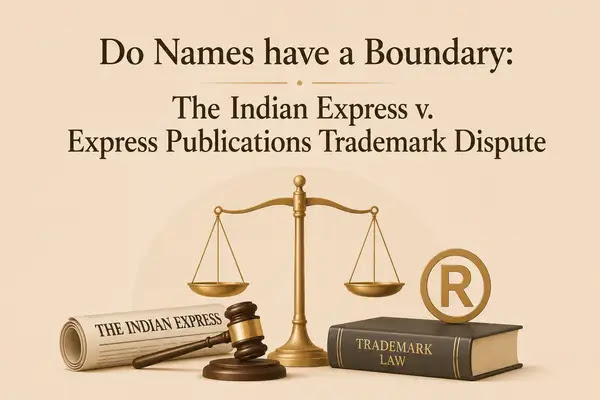
The “Indian Express” name has existed since 1932. That is not a trivial fact in this dispute. When Ramnath Goenka founded what would become one of India’s most recognised newspaper groups, he built a mark that carried both institutional credibility and commercial weight. When he died in 1991, the group fractured along family lines. The legal settlement that followed in 1995 divided the business but did not divide the trademark. Thirty years later, this distinction came before the Bombay High Court.
The dispute is nominally about whether Express Publications (Madurai) Pvt. Ltd., publisher of The New Indian Express, could organise an event called “The New Indian Express – Mumbai Dialogues” on 20th and 21st September 2024. At the level of the specific facts, yes, it is about that event. At the level of trademark law, it is about something that comes up more often than courts usually acknowledge. What exactly is a permitted user of a mark allowed to do with it, and where does the permission stop.
The Bombay High Court answered that question twice. First, through a single bench order by Justice R.I. Chagla on November 13, 2025, granting an interim injunction against Express Publications (Madurai). Then, through a Division Bench of Justices Bharati Dangre and Manjusha Deshpande on June 15, 2026, dismissing the appeal and upholding the injunction. The core finding at both stages was the same. The right to publish a newspaper in five southern states does not include the right to run commercial events under that name in Mumbai.
Background and the Consent Decree
Understanding why this case exists requires going back to 1991 and the aftermath of Ramnath Goenka’s death. The Indian Express Group, which he had built, became the subject of a family and business dispute over shareholding and control. The two branches that emerged were those of Vivek Goenka, who retained control of The Indian Express, and Manoj Kumar Sonthalia, who took charge of what became the southern operations. The parties entered a Memorandum of Settlement in 1995. The Madras High Court recorded this as a consent decree in 1997. A Supplemental Agreement followed in 2005. Together, these documents defined the post-split arrangement with considerable specificity.
The key term for this dispute is Clause 18(iv) of the MoS (Memorandum of Settlement). Under it, Express Publications (Madurai) received permission to use the name “New Indian Express” for publishing an English-language daily newspaper in Tamil Nadu, Kerala, Karnataka, Andhra Pradesh, and Orissa, and the Union Territories of Pondicherry, Yanam, the Andaman and Nicobar Islands, and Lakshadweep. Outside that geography and outside newspaper publication, the name belongs exclusively to The Indian Express (P) Ltd.
The Indian Express registered the trademark “Indian Express” in its name. The Intellectual Property Appellate Board in 2015 also issued an order restricting the Madurai group’s trademark rights to the five southern states covered by the settlement, and that order attained finality. “New Indian Express” as a title does not exist in the abstract. It exists because the 1995 MoS allowed it to exist, within defined limits.
What Triggered the Suit
On 20th September 2024, Express Publications (Madurai) organised an event in Mumbai titled “The New Indian Express – Mumbai Dialogues.” The event was ticketed and had sponsors. It generated revenue independent of the newspaper’s publication business.
The Indian Express filed a commercial suit before the Bombay High Court saying that the MoS gave the Madurai group the right to publish a newspaper in five states and running a revenue-generating, sponsored event in Mumbai under the “New Indian Express” name fell outside that right. The consent decree did not contemplate or permit it.
Senior Advocate Darius Khambata, appearing for The Indian Express, pressed two distinct points. The first was contractual. The MoS was clear that the permission was for newspaper publication within specified territories, and nothing more. The second was on trademark law. “New Indian Express” is a derivative of the registered mark “Indian Express,” and using a derivative outside the terms of permission amounts to infringement and passing off. He also placed the 2015 IPAB order on record to show that the Madurai group’s trademark rights had already been definitively confined to the southern states.
The Defence Arguments
The first defence was that the MoS did not expressly prohibit advertising or promoting the newspaper outside the five states. Since the document was silent on promotion, the argument ran, such activity was not barred.
The second was contextual. The parties had, over the years, advertised in each other’s newspapers. The Madurai group pointed to this conduct as evidence that cross-territory activity was always understood to be permissible, at least for promotional purposes.
The third was that Express Publications claimed it was not merely a permitted user of the mark but the registered proprietor of “The New Indian Express” trademark. On that basis, it argued it had independent rights that went beyond the MoS framework.
There was also a laches argument. The Indian Express had withdrawn a Delhi High Court suit in 2011, and the Madurai group alleged that The Indian Express had not objected to similar events in other cities before. This, it argued, amounted to acquiescence.
Findings of the Single Judge in 2025
On the textual question, the court read the MoS by its plain terms. The permission granted was for newspaper publication within specified territories. Promotion, advertising, and commercial events were not within that permission. The absence of an express prohibition did not expand the scope of what was granted. On the event itself, the court found that “The New Indian Express – Mumbai Dialogues” was not an ancillary promotional activity for the newspaper. It was a standalone programme with ticketed admission and sponsorship income. It generated an independent revenue stream. That made it a separate business activity, not an extension of newspaper publication, and therefore outside the rights the MoS conferred.
On the trademark argument, the court held that Express Publications’ ability to use the “New Indian Express” name derived entirely from the settlement arrangements. Adding the word “New” to the registered mark “Indian Express” did not create broader or independent rights. The registered owner of “Indian Express” was The Indian Express (P) Ltd., and the derivative mark existed only within the contractual framework.
On acquiescence, the court did not find sufficient basis to grant relief on that ground at the interim stage. The withdrawal of the Delhi suit in 2011 did not amount to a concession that out-of-territory events were permissible.
The court held that The Indian Express had established a prima facie case, that the balance of convenience lay in its favour, and that use of the mark outside the permitted territories risked diluting the “Indian Express” name and granted an interim injunction.
The court put it this way:
92. …The Plaintiff is the absolute proprietor of the mark “Indian Express”. The Defendant has been given limited, permitted use of the derivative mark only for publication, in the five southern states and UTs and nothing more. By merely adding “New” to the Plaintiff’s registered mark, the Defendant cannot claim that their limited user includes absolute and unregistered user of the mark “New Indian Express” outside of the five southern states and UTs. In my prima facie view “New Indian Express” is not a distinctive mark but one which was created by virtue of the MoS. Mere addition of ‘New’ does not make the mark distinctive. The judgment relied upon by the Plaintiff in this context namely M/s. Aviva Fiber (Supra) and Ruston and Hornsby Ltd. (Supra) are opposite.
The Division Bench (June 2026)
Express Publications (Madurai) appealed to the Division Bench. The bench comprised Justices Bharati Dangre and Manjusha Deshpande and the Division Bench dismissed the appeal. It found no perversity or infirmity in the single judge’s exercise of discretion. Where a discretionary order is passed at the interim stage after a proper consideration of the prima facie case, balance of convenience, and irreparable harm, an appellate court does not lightly interfere with it. The Division Bench found no reason to do so here. The interim injunction therefore stands pending final adjudication of the suit.
Legal Principles involved
Permitted user versus registered proprietor
The Trade Marks Act, 1999 distinguishes between the registered proprietor of a mark and a person who uses the mark with the proprietor’s consent. A permitted user is not the same as a registered proprietor, and the rights conferred by permitted use are necessarily bounded by the terms under which permission was granted. Express Publications attempted to collapse this distinction by claiming registered proprietorship of “The New Indian Express,” but the court did not accept that this independent registration could override or expand what the MoS allowed.
Contractual limits on trademark use
Where trademark rights are distributed through a settlement agreement recorded as a consent decree, the decree forms the governing instrument. The parties are bound by its terms, and courts will interpret those terms according to their plain meaning. The Madurai group’s argument that silence on promotion amounted to permission was precisely the kind of expansion that the court declined to accept. What is not granted is not permitted. What is not expressly prohibited is not automatically allowed.
The Derivative mark problem
This case raises a question that recurs in franchise disputes and family business splits: can a derivative mark, created by adding a prefix or suffix to a registered mark, acquire independent life and rights beyond the original framework? The court’s answer was no, at least on the facts here. “New Indian Express” exists because “Indian Express” was licensed to the Madurai group for a specific purpose. The derivative mark cannot be used to claim rights that were never within the scope of the original licence.
If you want to understand how courts approach brand confusion and deceptive similarity, the analysis in this post on the Alkem Laboratories v. Numen Pharma trademark dispute covers how visual and phonetic similarity is assessed between competing pharmaceutical marks.
Why the Event Made a Difference
The event in Mumbai was ticketed and had sponsors. If Express Publications had simply placed an advertisement for The New Indian Express in a Mumbai newspaper, or put up billboards in Pune to draw readers to its southern editions, the argument about promotional necessity would have carried more weight. Newspapers do advertise outside their circulation territories. That kind of activity has a connection to the publication itself.
Whereas “The New Indian Express – Mumbai Dialogues” was different. It generated a separate revenue stream through ticket sales and sponsorship. The event had its own commercial identity and a person attending the event in Mumbai was not necessarily buying or reading the newspaper. The event operated as an independent business vehicle using the name.
That distinction is what the single judge treated as decisive, and the Division Bench did not disagree. Once the event was characterised as a standalone commercial activity rather than newspaper promotion, the question became simple enough. Did the MoS permit Express Publications to conduct such activities under the “New Indian Express” name outside the five states? Clearly not.
This principle has implications beyond the present case. Businesses that hold licensed marks often expand into adjacent activities, events, product lines, and digital platforms. Each such expansion raises the question of whether the licence covers it. This judgment confirms that courts will read licence scope narrowly. If it is not within what the agreement granted, it requires fresh permission.
Consent Decrees and Their Binding Force
The MoS was not merely a private contract between two parties. It was recorded as a consent decree by the Madras High Court in 1997. Consent decrees carry a different weight from ordinary contracts. They have the force of a court order and can only be modified through the court that passed them.
This means that when Express Publications argued that the MoS did not prohibit promotion outside the southern states, it was effectively asking the Bombay High Court to expand the scope of a Madras High Court decree in its favour. Courts are understandably reluctant to read consent decrees expansively. The decree reflects what the parties agreed to, and nothing else. The existence of a consent decree also affects the acquiescence argument. Even if The Indian Express had failed to object to prior events, that failure does not amount to a modification of a court decree. Waiver or acquiescence can sometimes qualify contractual rights, but it cannot override the terms of a court order without a formal application to vary it.
A similar dynamic around judicial orders and procedural compliance came up in a different context in this post on trademark condonation delay in Rajinder Singh v. Registrar.
Order in June 2026
The interim injunction is not the final adjudication of the dispute. The suit is still pending adjudication on the merits and several questions remain open.
The most significant is whether Express Publications’ registered trademark for “The New Indian Express” can survive as an independent right, or whether it is entirely subordinate to and defined by the MoS framework. At the interim stage, the court found that the derivative mark could not create rights beyond the settlement. The full trial may require a more detailed examination of what rights that registration actually confers.
There is also the acquiescence argument, which was not conclusively rejected but set aside for the interim stage. If evidence emerges that The Indian Express consistently allowed similar events in cities outside the five states without objection, that could complicate the final adjudication.
The suit’s outcome will also determine the shape of the relationship between the two organisations going forward. The Madurai group has grown The New Indian Express into a significant publication. Its business model likely involves events, digital extensions, and activities beyond print. Each of those will now need to be evaluated against what the MoS permits.
Also Read: Calcutta HC Returns ITC Plaint for Skipping Section 12A Mediation
Conclusion
A mark, a settlement agreement, a consent decree, and an activity that fell outside both the territory and the purpose for which the mark was licensed. The Bombay High Court did not have to construct elaborate doctrine to reach its conclusion. It read the agreement, applied the principle that a permitted user cannot exceed the terms of permission, and granted relief. A licensee of a trademark does not hold a blank cheque. The permission is as wide as the agreement that grants it, and no wider. Where that agreement is also a consent decree, the narrowness is locked in doubly. Once by the contract, once by the court order.
The Madurai group had thirty years to renegotiate or seek clarification on the scope of its rights. It chose instead to expand into events and activities and then argue the settlement did not prohibit it. Courts do not look favourably on that kind of retroactive gap-filling. The Indian Express, which has held the “Indian Express” mark since 1932 and built its reputation over nearly a century, was always going to win this argument.
If you found this analysis useful, you may also want to read the post on trademark infringement and export use under Madras High Court’s analysis in V.V.V. & Sons v. Meenakshi Overseas, which deals with a related question of how and where trademark use is legally recognised.
References:
- https://indiankanoon.org/doc/72934444/
- https://www.barandbench.com/news/bombay-high-court-upholds-bar-on-new-indian-express-operations-outside-southern-states
- https://www.storyboard18.com/brand-marketing/bombay-hc-affirms-territorial-limits-on-new-indian-express-brand-use-101216.html