
Skip to content
Subscribe

Browse the archive

Tag: Trademark Infringement

trademark

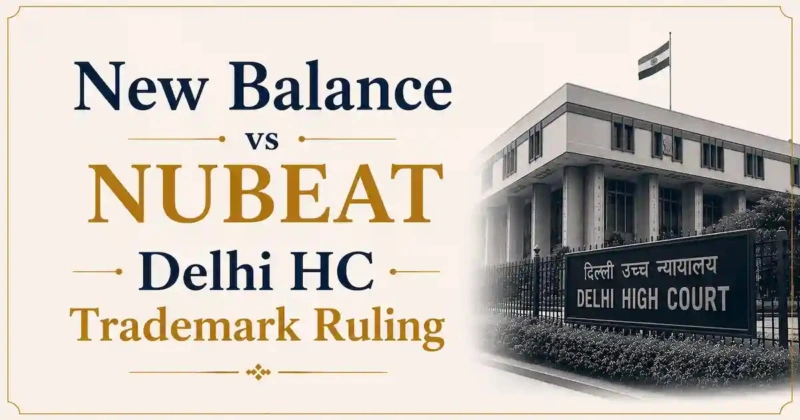
New Balance vs NUBEAT: Delhi HC Trademark Ruling Explained

The Delhi High Court recently issued a landmark interim order in New Balance Athletics Inc. v. Astormueller AG, addressing the complex intersection of trademark infringement and passing off. While the court declined to enjoin all marks, it protected New Balance’s iconic 'N' branding against the defendant's 'n:' device. The judgment clarifies that prior registration does not shield a defendant from passing off claims and reiterates that secondary meaning is crucial for single-letter marks. This analysis breaks down the court’s reasoning on deceptive similarity, the 'n:' colon device, and well-known mark protections.

8 min read
trademark

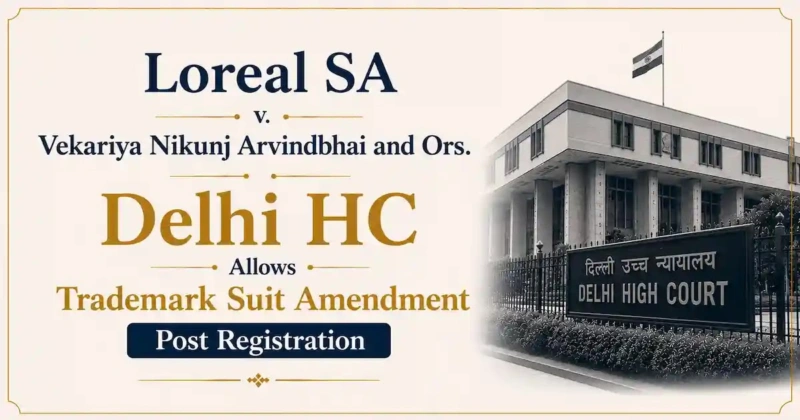
Adding Infringement Claims to Passing Off Suits in Delhi

In a significant procedural ruling, the Delhi High Court in Loreal SA v. Vekariya Nikunj Arvindbhai clarified that plaintiffs can amend a pending passing off suit to include trademark infringement once registration is granted. The Court emphasized the 'real controversy' test, rejecting the notion that subsequent registration requires a fresh lawsuit. By allowing the amendment under Order VI Rule 17 CPC, the Court aims to prevent the multiplicity of proceedings and streamline litigation. This decision offers crucial guidance for brand owners navigating shifting legal statuses during ongoing trademark disputes in India.

5 min read
trademark

Landmark Crafts Wins Landmark HP Trademark Injunction

The Delhi High Court has granted an ex parte ad-interim injunction in favor of Landmark Crafts Limited against Shalini Garg, owner of Shree Mange Ram And Sons. The dispute centered on the defendant's attempt to use the 'ISI' prefix alongside the plaintiff's registered 'HP' mark to bypass trademark laws. Justice Jyoti Singh ruled that 'HP' remains the dominant feature of the mark, and certification indicators cannot be monopolized. This decision reaffirms the importance of consistent enforcement in protecting a brand's hard-earned goodwill against deceptive 'fig leaf' tactics in the fastener industry.

8 min read
Weekly IP Digest

Weekly Indian IP Law Digest: June 28 – July 4, 2026

Our latest IP law digest covers significant Indian and global developments. Highlights include the Delhi High Court's dynamic injunctions against rogue streaming websites and landmark rulings on SEP security deposits in the InterDigital v. Transsion litigation. We delve into personality rights regarding deepfakes, arbitration clauses in franchise agreements, and international disputes like the Nike-7-Eleven trademark clash. Additionally, learn about the Trademark Registry's upgraded search portal, new patent agent exam registration details, and Shopify’s trade secret settlement. Stay ahead with essential summaries of high-stakes litigation and administrative updates shaping the modern intellectual property landscape.

20 min read
trademark

Delhi HC: Beer and Whisky Are Allied and Cognate Goods

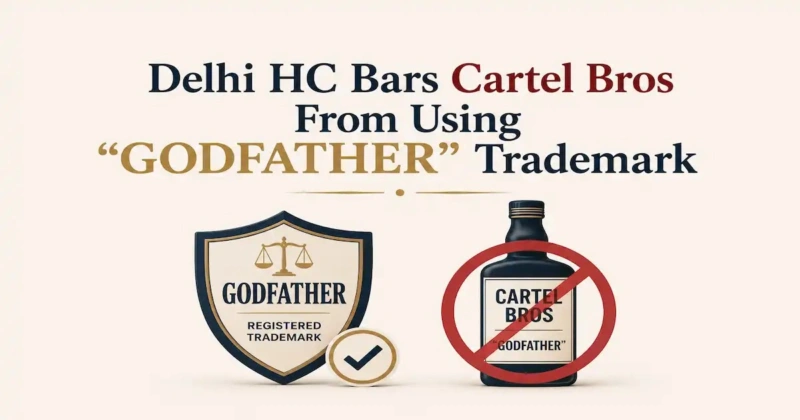
The Delhi High Court’s landmark interim order in Devans Modern Breweries v. Cartel Bros clarifies essential trademark principles for the liquor industry. Justice Tushar Rao Gedela confirmed that beer and whisky are allied and cognate goods despite pricing and alcohol content differences. The Court also held that a registered proprietor’s right to sue is not extinguished by non-use in a specific sub-category. Crucially, the anti-dissection rule cannot be used to mask the adoption of a dominant mark within a composite label. This ruling serves as a vital precedent for brand enforcement.

13 min read
trademark

DRS Logistics v. Google: Trademark Contempt Dismissed

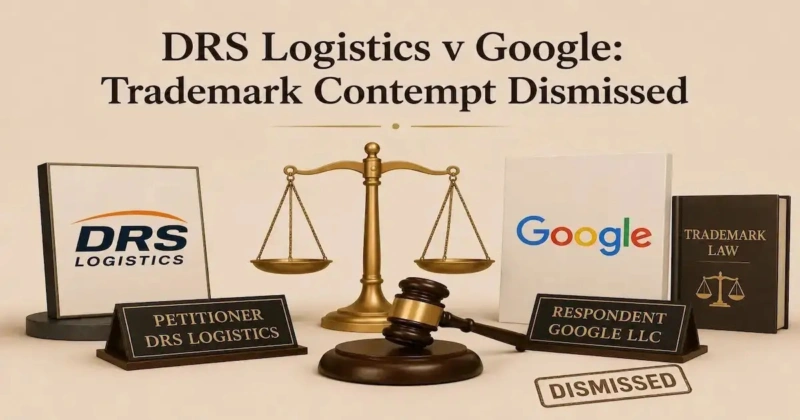
The Delhi High Court has dismissed a contempt application filed by DRS Logistics against Google, clarifying the limits of platform liability in keyword advertising disputes. Justice Tejas Karia ruled that while Google remains bound by its policy-based undertaking to protect trademarks, prior court orders did not impose a proactive, continuous monitoring obligation on the platform. This judgment distinguishes between actionable keyword use and explicit Ad-Text appearances, offering a critical roadmap for trademark owners to navigate the complaint-based enforcement model currently preferred by Indian courts in digital advertising.

14 min read
trademark

Microtek v. Okaya: Delhi HC Ruling on Trade Libel

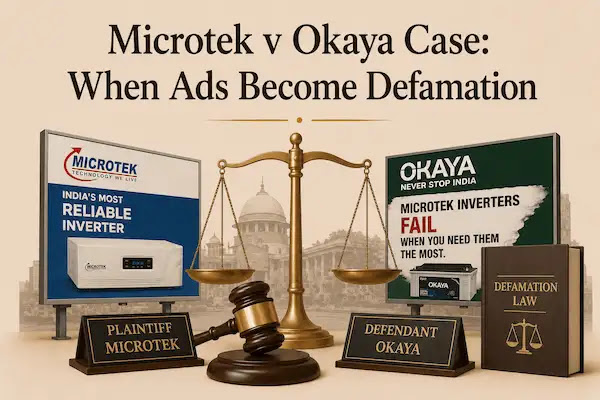
The Delhi High Court recently issued an interim injunction against deceptive advertising practices in the battery sector. In the case of Microtek v. Sukhveer Singh & Ors., the court addressed the misuse of court orders to spread false narratives about a competitor’s legal standing via social media. Distinguishing between acceptable comparative advertising and actionable trade libel, the court highlighted that false factual claims targeting a registered trademark are not protected speech. This ruling serves as a critical precedent for brand owners dealing with digital campaigns that damage market reputation through fabricated misinformation.

10 min read
Weekly IP Digest

Weekly Indian IP Law Digest: June 15-20, 2026

This week's IP law digest covers critical developments in Indian jurisprudence. The Bombay High Court affirmed territorial restrictions for media brands, while the Delhi High Court clarified the limits of contempt jurisdiction regarding keyword ads on Google. We also explore significant rulings on patent examination, comparative advertising, and personality rights, including Preity Zinta's move against AI deepfakes. Internationally, the US Supreme Court's decision on skinny labels and new patent rulings from the UPC and China highlight the evolving landscape of global intellectual property enforcement and strategic brand protection.

15 min read
trademark

Exporting Goods? New Madras HC Ruling on Infringement

The Madras High Court has issued a landmark ruling in the V.V.V. & Sons Idhayam case, settling whether exporting goods under a competitor's trademark constitutes infringement. The court held that the mere act of affixing a registered trademark to goods in India for export constitutes 'use' under the Trade Marks Act, regardless of whether the products are sold domestically. This decision rejects the argument that lack of Indian consumer exposure grants immunity. For Indian manufacturers, this means export-oriented production must now strictly comply with domestic trademark rights to avoid legal liability.

9 min read
trademark

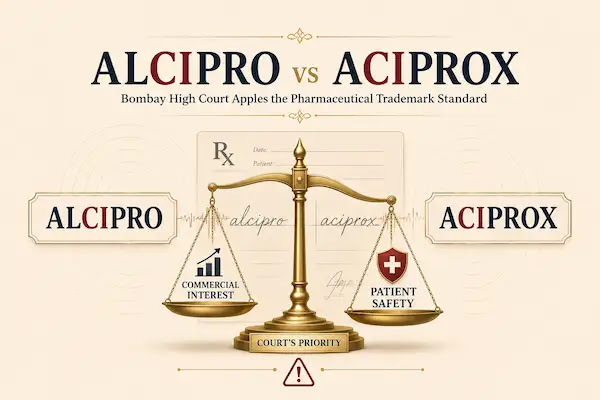
Alkem v. Numen: Bombay HC on Pharma Trademark Confusion

In the recent case of Alkem Laboratories v. Numen Pharma, the Bombay High Court clarified the high standard for pharmaceutical trademarks in India. By applying the bare possibility test, the court reinforced that in the drug industry, even a remote risk of confusion is sufficient to warrant an injunction. The ruling highlights that phonetic similarity and the overall commercial impression of marks take precedence over technical arguments about different drug classes. For companies, this serves as a stern reminder that patient safety overrides minor differences in pharmaceutical branding and composition.

9 min read