An Advocate enrolled on the rolls of the Bar Council of the State of Andhra Pradesh. What started as curiosity about how the law protects ideas, brands, inventions, and creative works gradually developed into a genuine passion for studying and explaining IP law, inspiring me to pursue a Masters degree (LL.M.) in Intellectual Property Rights (IPR).
The ANI v. OpenAI litigation places Section 52 of the Copyright Act 1957 at the center of India's AI regulatory debate. With the Delhi High Court weighing whether unlicensed training of large language models on copyrighted news content constitutes fair dealing, the outcome will dictate the future of generative AI in India. While the DPIIT explores compulsory licensing, the current impasse highlights the legislative gap left by the 2012 amendment. Simultaneously, the Thaler application regarding AI authorship challenges the interpretation of Section 2(d)(vi) for autonomous, non-prompted machine outputs.
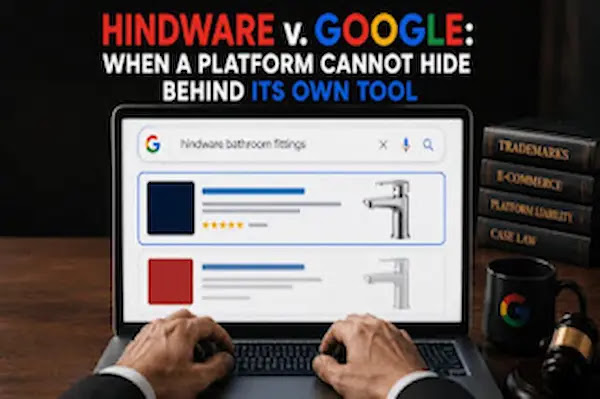
The Delhi High Court has established that Google is liable for trademark infringement when it auctions coined, registered trademarks as keywords to direct competitors. By actively selecting and monetising these marks, Google forfeits its safe harbour protection under the IT Act. This landmark ruling clarifies that invisible backend bidding constitutes use in advertising under Section 29(6)(d) of the Trade Marks Act 1999. Rights holders can now hold platforms directly accountable for exploiting brand equity, regardless of whether the trademark appears in the visible sponsored advertisement text.
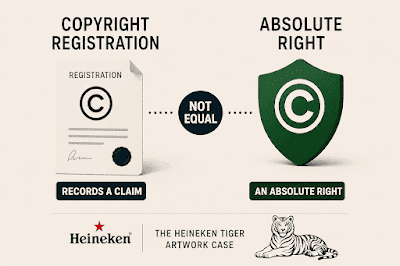
Copyright registration in India serves as an administrative record of a claim rather than a conclusive verdict on originality. The Delhi High Court in Heineken Asia Pacific Pte. Ltd. v. Vijay Keshav Wagh reaffirmed that registrations obtained for labels lacking originality or violating the Section 45 proviso—requiring search certificates for conflicting trademarks—are vulnerable to rectification under Section 50. Brand owners must ensure their label designs are truly original, as the intersection of copyright and trademark law allows for dual enforcement when artistic works are copied onto commercial products.
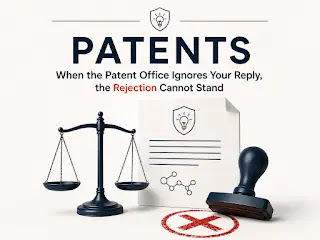
When the Indian Patent Office issues a refusal order that ignores an applicant’s prior submissions, it violates the fundamental principles of natural justice. Under Section 117A of the Patents Act, 1970, the Delhi High Court has clarified that controllers must engage substantively with an applicant's response to the First Examination Report. A failure to address these arguments, combined with a disregard for the mandatory five-step F. Hoffmann-La Roche test for inventive step, renders a rejection order legally unsustainable and liable to be set aside for procedural error.
Trademarks are protected by their dominant and distinctive features, not by superficial changes in numerals or punctuation. The 'dominant feature test' in India establishes that if a junior mark retains the essential identifying element of a well-known brand—such as 'Liv' in liver-care products—a change in a suffix or numeral is insufficient to escape liability. Courts look to the overall commercial impression of the mark to prevent trademark dilution and consumer confusion, reinforcing that one cannot appropriate established goodwill through trivial, cosmetic modifications.
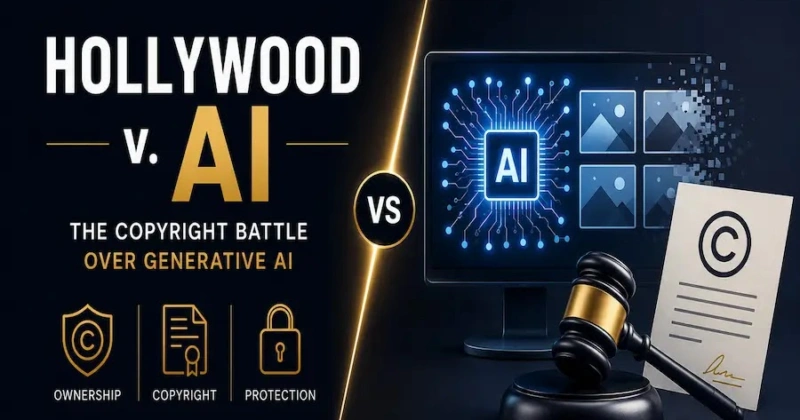
Courts are now actively permitting copyright infringement claims regarding AI training data to proceed to trial, signaling a major shift in legal risk for generative AI developers. The refusal of the US court to dismiss the Disney, Universal, and Warner Bros v. MiniMax case confirms that utilizing copyrighted works without authorization for model training constitutes a legally sufficient claim for direct and secondary infringement. For Indian IP practitioners, this sets a critical precedent for how global courts evaluate the unlicensed ingestion of protected content in commercial AI systems.
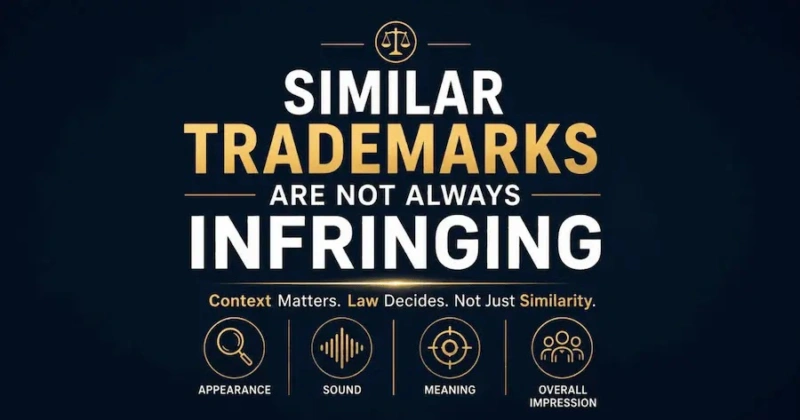
Trademark coexistence in India is determined by the likelihood of confusion rather than mechanical similarity of marks. As established in Nandhini Deluxe, registration does not grant absolute monopolies across all goods within a class if the commercial sectors differ significantly. Similarly, surnames like Goenka require proof of acquired distinctiveness to earn protection. Courts employ a holistic approach, weighing consumer perception, trade channels, and honest concurrent use under Section 12 of the Trade Marks Act 1999 to determine if similar marks can legitimately function alongside one another.
•4 min read
Free Email Newsletter
Stay Ahead in IP Law with Its IP Time
Receive concise weekly and monthly IP Law updates.