Skip to content
Subscribe

Browse the archive

Category: trademark

trademark

Registry Fails Notice Duty: Rajinder Singh Trademark Case

The Delhi High Court has reinforced that the Trade Marks Registry cannot rely on its own procedural failures to extinguish a proprietor's rights. Under Section 25(3) of the Trade Marks Act 1999, the Registrar has a mandatory obligation to issue valid renewal notices. When the Registry fails to serve the O-3 notice at the correct address, the resulting lapse is legally void. This decision protects long-standing brand owners from losing their registration due to administrative oversight, confirming that statutory duties of government authorities are not discretionary.
8 min read
trademark

Bombay HC on Pharma Trademarks: The Bare Possibility Test

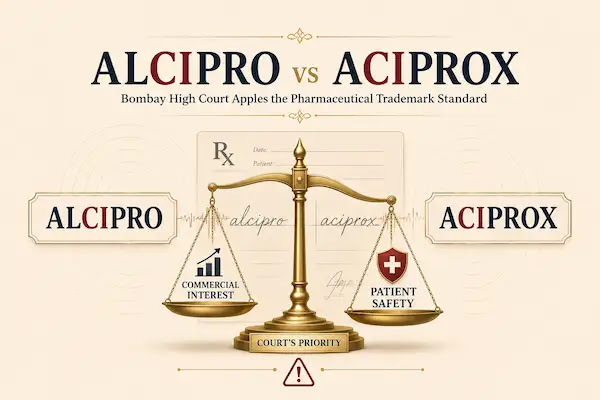
In Indian pharmaceutical trademark law, the 'bare possibility' test is the primary threshold for determining deceptive similarity. Because patient safety outweighs commercial interest, courts do not require proof of actual confusion or probability; they intervene if there is even a remote risk of error during prescription or dispensing. Applying the anti-dissection rule, courts assess marks as a whole rather than by syllable, ensuring that confusingly similar drug names are restrained even when they belong to different therapeutic classes or contain different active ingredients.

9 min read
trademark

Moti Mahal Trademark Dispute: Enforcing Franchisee Compliance

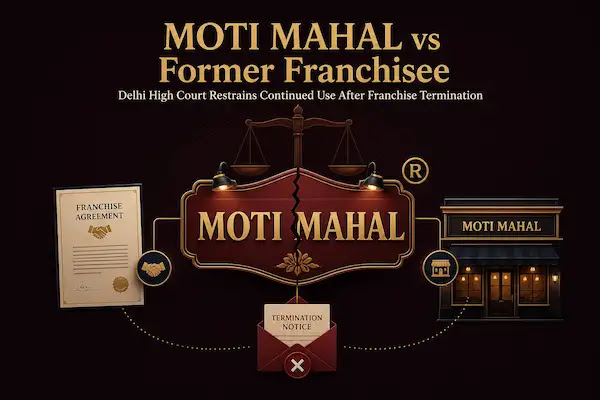
The Delhi High Court's ruling in the Moti Mahal trademark dispute underscores that post-termination use of a mark by a franchisee constitutes clear-cut infringement. By highlighting the strength of express contractual acknowledgment clauses in franchise agreements, the Court provided a robust mechanism for brand owners to secure immediate relief. The order serves as a definitive guide for protecting intellectual property within franchise networks, affirming that aggregators and digital platforms must also comply with takedown orders to prevent irreparable brand harm and consumer confusion in the hospitality sector.

8 min read
Copyright

IndiaMart Phishing Injunction: Delhi HC Tackles Cyber Fraud

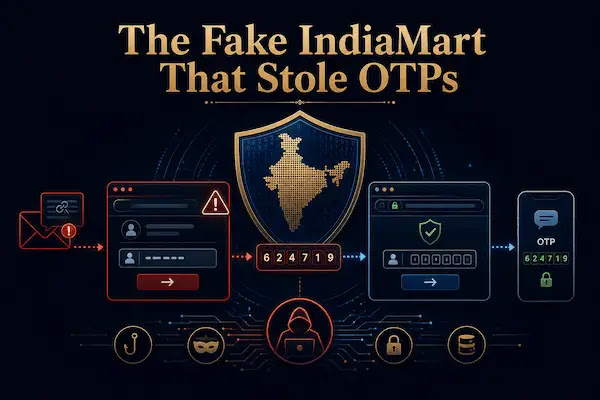
The Delhi High Court's recent IndiaMart injunction marks a major evolution in Indian IP enforcement by targeting the entire infrastructure of cyber fraud, including cloud hosts and telecom providers. By classifying website GUI as original artistic work under Section 2(c) of the Copyright Act and treating cloud platform infrastructure as an instrument of infringement, the Court has provided a robust framework for combatting OTP relay attacks. This order serves as a pivotal precedent for platform-wide protection and the accountability of digital intermediaries in preventing systemic trademark abuse.

10 min read
trademark

Google Liable for Trademark Infringement in Keyword Bidding

The Delhi High Court has established that Google is liable for trademark infringement when it auctions coined, registered trademarks as keywords to direct competitors. By actively selecting and monetising these marks, Google forfeits its safe harbour protection under the IT Act. This landmark ruling clarifies that invisible backend bidding constitutes use in advertising under Section 29(6)(d) of the Trade Marks Act 1999. Rights holders can now hold platforms directly accountable for exploiting brand equity, regardless of whether the trademark appears in the visible sponsored advertisement text.

11 min read
trademark

Dominant Feature Test: Himalaya Liv-52 Landmark Ruling

Trademarks are protected by their dominant and distinctive features, not by superficial changes in numerals or punctuation. The 'dominant feature test' in India establishes that if a junior mark retains the essential identifying element of a well-known brand—such as 'Liv' in liver-care products—a change in a suffix or numeral is insufficient to escape liability. Courts look to the overall commercial impression of the mark to prevent trademark dilution and consumer confusion, reinforcing that one cannot appropriate established goodwill through trivial, cosmetic modifications.

3 min read
trademark

Similar Trademarks: Inside the Doctrine of Coexistence in India

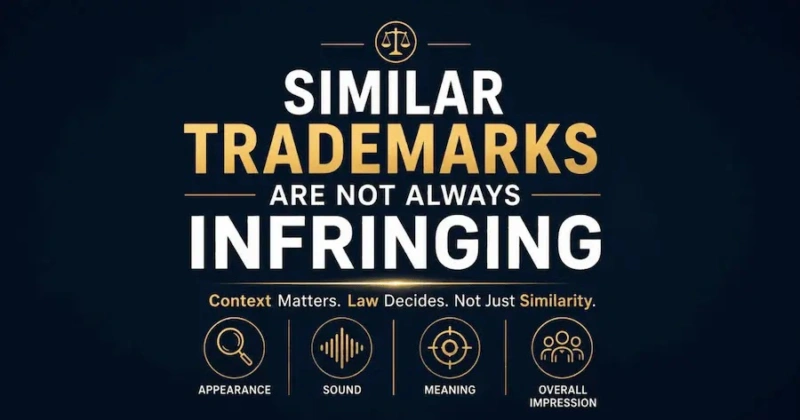
Trademark coexistence in India is determined by the likelihood of confusion rather than mechanical similarity of marks. As established in Nandhini Deluxe, registration does not grant absolute monopolies across all goods within a class if the commercial sectors differ significantly. Similarly, surnames like Goenka require proof of acquired distinctiveness to earn protection. Courts employ a holistic approach, weighing consumer perception, trade channels, and honest concurrent use under Section 12 of the Trade Marks Act 1999 to determine if similar marks can legitimately function alongside one another.

4 min read