
Skip to content
Subscribe

Browse the archive

Tag: Delhi High Court

trademark

Landmark Crafts Wins Landmark HP Trademark Injunction

The Delhi High Court has granted an ex parte ad-interim injunction in favor of Landmark Crafts Limited against Shalini Garg, owner of Shree Mange Ram And Sons. The dispute centered on the defendant's attempt to use the 'ISI' prefix alongside the plaintiff's registered 'HP' mark to bypass trademark laws. Justice Jyoti Singh ruled that 'HP' remains the dominant feature of the mark, and certification indicators cannot be monopolized. This decision reaffirms the importance of consistent enforcement in protecting a brand's hard-earned goodwill against deceptive 'fig leaf' tactics in the fastener industry.
8 min read
patent

Delhi HC Denies Deuterated Drug Patent in Intra-Cellular

The Delhi High Court has dismissed an appeal by Intra-Cellular Therapies regarding a patent for deuterated psychiatric drug compounds. The court reaffirmed that a broad genus claim in earlier patents precludes novelty for specific species, even if not explicitly named. Furthermore, the judgment clarifies that evidence of improved bioavailability does not automatically satisfy the enhanced therapeutic efficacy requirement under Section 3(d) of the Patents Act. This decision serves as a crucial warning to pharmaceutical innovators that pharmacokinetic data alone is insufficient to support patent claims without proven clinical improvements in therapeutic outcomes.

8 min read
trademark

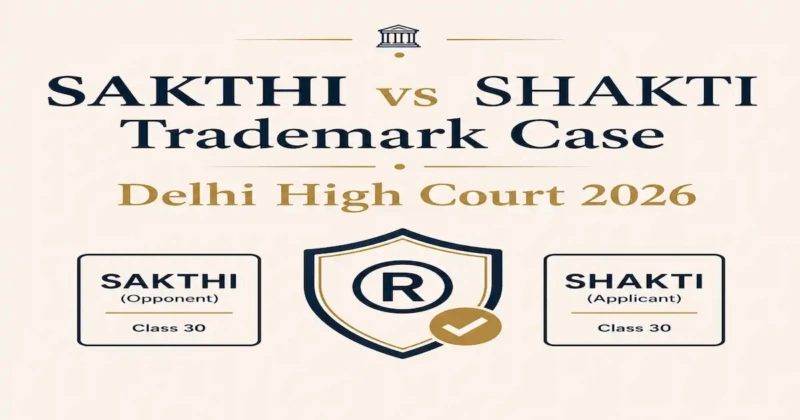
SAKTHI vs SHAKTI: Lessons on Trademark Rectification

The Delhi High Court recently issued a landmark ruling in P.C. Duraisamy v. Kewal Krishan Kumar, ordering the removal of the SHAKTI trademark from the Register. The case highlights the limitations of claiming rights over a standalone word based solely on its inclusion in a composite mark. Despite the respondent's clever legal arguments under Sections 17 and 55(2) of the Trade Marks Act, the Court demanded actual evidence of independent use. This decision serves as a vital reminder that paper registrations without genuine, verifiable commercial usage are highly vulnerable to cancellation.

9 min read
Weekly IP Digest

Weekly IP Law Digest: June 21-27, 2026

This week's IP digest covers crucial Indian judicial developments, including the Delhi High Court's ruling on the Godfather trademark case, confirming that registered marks remain enforceable despite non-use. We explore critical patent insights from Shaafi Naturcure, where post-filing evidence was rejected, and Fraunhofer’s failed biomass patent. The digest also reviews high-stakes copyright battles, trademark rectification petitions involving 'Shakti', and the prestigious induction of Justice Prathiba M. Singh into the International IP Hall of Fame. Additionally, we analyze global IP trends, including US pharmaceutical patent disputes and CJEU platform liability rulings concerning algorithmic content curation.

12 min read
patent

NBA Approval Not a Passport to Patentability: Delhi HC

The Delhi High Court has clarified in Shaafi Naturcure LLP v. Assistant Controller of Patents that approval from the National Biodiversity Authority (NBA) does not guarantee patentability. The court dismissed the appeal, ruling that the Biological Diversity Act and the Patents Act serve distinct objectives. Additionally, the bench emphasized that post-filing evidence cannot compensate for deficiencies in the original specification. With internal contradictions regarding synergistic effects and a failure to overcome traditional knowledge exclusions under Section 3(p), this judgment provides a vital roadmap for practitioners handling biodiversity-based pharmaceutical inventions in India.

14 min read
trademark

Delhi HC: Beer and Whisky Are Allied and Cognate Goods

The Delhi High Court’s landmark interim order in Devans Modern Breweries v. Cartel Bros clarifies essential trademark principles for the liquor industry. Justice Tushar Rao Gedela confirmed that beer and whisky are allied and cognate goods despite pricing and alcohol content differences. The Court also held that a registered proprietor’s right to sue is not extinguished by non-use in a specific sub-category. Crucially, the anti-dissection rule cannot be used to mask the adoption of a dominant mark within a composite label. This ruling serves as a vital precedent for brand enforcement.

13 min read
trademark

Natural Justice in Trademark Refusals: Purpos Planet Ruling

The Delhi High Court's ruling in Purpos Planet v. The Registrar of Trade Marks reinforces the fundamental requirement for quasi-judicial bodies to provide reasoned, speaking orders. When the Registry refuses a trademark application without addressing the applicant's substantive submissions—such as the anti-dissection rule or prior registrations—it violates natural justice. This case highlights the necessity of thorough examination practices and the right of applicants to receive a detailed explanation for rejection. The decision serves as a critical reminder that Registry orders must engage with the specific legal contentions raised by trademark applicants.

13 min read
trademark

DRS Logistics v. Google: Trademark Contempt Dismissed

The Delhi High Court has dismissed a contempt application filed by DRS Logistics against Google, clarifying the limits of platform liability in keyword advertising disputes. Justice Tejas Karia ruled that while Google remains bound by its policy-based undertaking to protect trademarks, prior court orders did not impose a proactive, continuous monitoring obligation on the platform. This judgment distinguishes between actionable keyword use and explicit Ad-Text appearances, offering a critical roadmap for trademark owners to navigate the complaint-based enforcement model currently preferred by Indian courts in digital advertising.

14 min read
trademark

Microtek v. Okaya: Delhi HC Ruling on Trade Libel

The Delhi High Court recently issued an interim injunction against deceptive advertising practices in the battery sector. In the case of Microtek v. Sukhveer Singh & Ors., the court addressed the misuse of court orders to spread false narratives about a competitor’s legal standing via social media. Distinguishing between acceptable comparative advertising and actionable trade libel, the court highlighted that false factual claims targeting a registered trademark are not protected speech. This ruling serves as a critical precedent for brand owners dealing with digital campaigns that damage market reputation through fabricated misinformation.

10 min read
Weekly IP Digest

Weekly Indian IP Law Digest: June 15-20, 2026

This week's IP law digest covers critical developments in Indian jurisprudence. The Bombay High Court affirmed territorial restrictions for media brands, while the Delhi High Court clarified the limits of contempt jurisdiction regarding keyword ads on Google. We also explore significant rulings on patent examination, comparative advertising, and personality rights, including Preity Zinta's move against AI deepfakes. Internationally, the US Supreme Court's decision on skinny labels and new patent rulings from the UPC and China highlight the evolving landscape of global intellectual property enforcement and strategic brand protection.

15 min read