
Skip to content
Subscribe

Browse the archive

Tag: Delhi High Court

trademark

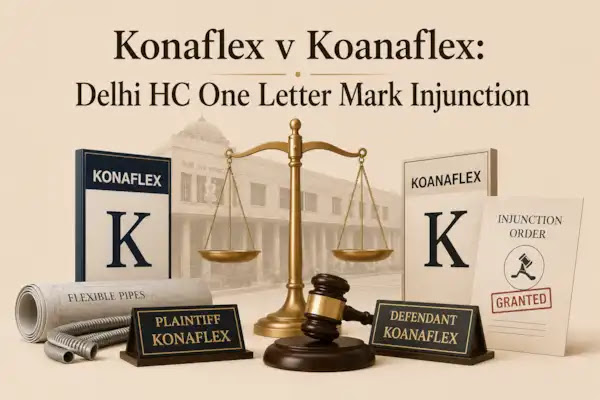
Konaflex v. Koanaflex: One-Letter Trademark Injunction

The Delhi High Court has reaffirmed that trademark infringement does not require identical marks, only deceptive similarity. In Konaflex v. Koanaflex, the court examined whether adding a single vowel to a brand name sufficiently distinguishes it. Concluding that the marks were phonetically and visually indistinguishable in the trade, the court granted an injunction. This ruling emphasizes that courts prioritize the practical realities of how orders are placed—often orally—over technical spelling differences. For business owners, this highlights the risks of adopting marks that ride too closely to existing coined brands.
7 min read
patent

Delhi HC Awards Rs 152 Cr in Historic CCA Patent Verdict

In a landmark decision, the Delhi High Court has awarded Rs 152.32 Crore in damages in Communication Components Antenna Inc. v. Rosenberger, marking one of the largest patent awards in Indian history. The court upheld Indian Patent No. 240893, rejecting revocation claims and establishing infringement through MATLAB simulations. The judgment introduces the 'Dartboard Model' to curb frivolous prior art challenges and provides a robust framework for royalty-based damages in oligopolistic markets. This ruling underscores India's commitment to stringent IP enforcement, particularly in the telecommunications infrastructure sector, ensuring meaningful consequences for bad-faith patent infringement.

14 min read
trademark

Delhi HC Cancels ‘Glass Skin’ Trademark Registration

In a decisive ruling, the Delhi High Court has cancelled the 'GLASS SKIN' trademark registration, asserting that descriptive lifestyle terms cannot be monopolized by a single entity. The case of Renee Cosmetics v. Rupali Sharma highlights the dangers of 'proposed-to-be-used' filings being weaponized to block competitors via platform takedowns. The Court reinforced that descriptive terms belong to the trade and cannot serve as source identifiers without evidence of secondary meaning. This judgment serves as a vital reminder that trademark registries must rigorously filter out common descriptive vocabulary during the examination process.

10 min read
trademark

Restoring Lapsed Trademarks: Rajinder Singh v. Registrar

The Delhi High Court's ruling in Rajinder Singh v. Registrar of Trade Marks underscores the mandatory obligation of the Registry to ensure proper service of renewal notices under Section 25(3). When the Registry fails to update address records and sends notices to defunct addresses, it cannot rely on its own procedural errors to extinguish a proprietor's rights. This case adds to a growing list of precedents where courts have intervened to restore marks lapsed due to administrative negligence, ensuring that commercial rights remain protected against bureaucratic failures in the trademark renewal process.

8 min read
patent

Delhi HC Reverses Philips SEP Decree: A Landmark Ruling

In a decisive judgment, the Delhi High Court has overturned the 2018 decree in K.K. Bansal v. Philips, which was previously recognized as India's first SEP trial judgment. The Division Bench ruled that Philips failed to prove its patent's essentiality through admissible evidence or proper claim charts, and rejected the royalty claims due to a lack of comparable licensing data. Furthermore, the court clarified that Section 107A(b) provides broad protection for downstream assemblers in an authorized supply chain. This ruling establishes a rigorous evidentiary standard for all future standard essential patent litigation in India.

13 min read
trademark

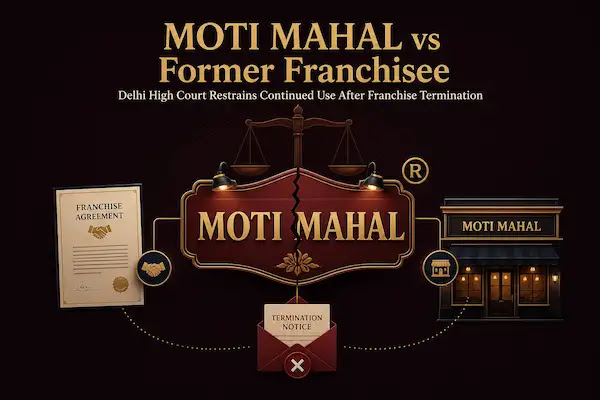
Moti Mahal Trademark Dispute: Franchise Default &

The Delhi High Court has restrained a former franchisee from using the 'MOTI MAHAL' brand following a terminated agreement. This ruling clarifies that post-termination use of a licensed mark constitutes clear infringement. By highlighting the strength of franchise agreements as an IP tool, the Court protected the 100-year-old brand from unauthorized operations across physical outlets and online food aggregators. The decision is a vital reminder for brand owners that robust contractual terms and proactive enforcement are essential to maintaining exclusive rights and preventing irreparable harm in the competitive hospitality sector.

8 min read
Copyright

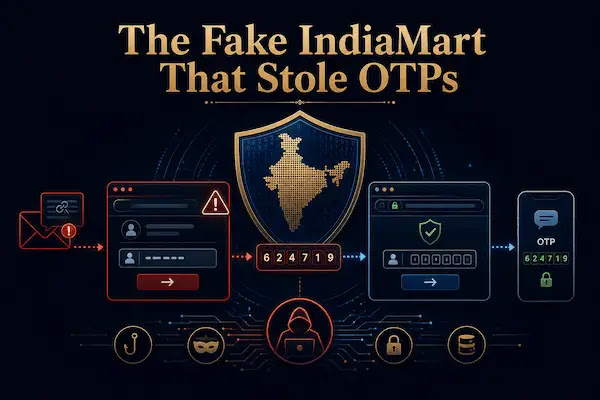
IndiaMart OTP Phishing: Delhi HC Targets Global

The Delhi High Court has issued a landmark ex parte ad-interim injunction against phishing operators targeting IndiaMart. The ruling is groundbreaking for its reach, involving international cloud providers like Vercel, Netlify, and GitHub as defendants to dismantle the infrastructure behind OTP relay attacks. By recognizing website GUI as copyrightable and treating cloud platforms as enablers of fraud, the Court has provided a new blueprint for IP enforcement in the digital age. This case demonstrates how Indian courts are now actively integrating cybercrime and IP protection to safeguard online businesses.

10 min read
trademark

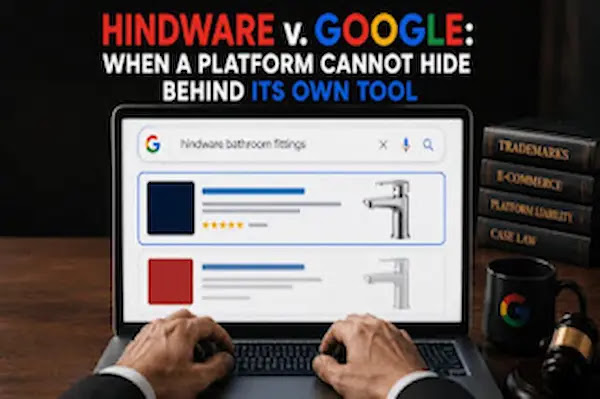
Google Liable for Keyword Bidding: Hindware v. Google

In the landmark ruling of Hindware v. Google, the Delhi High Court has fundamentally shifted the framework of intermediary liability in India. Moving away from the 'visibility' test, the Court ruled that Google’s keyword auction mechanism constitutes active participation in trademark infringement. By monetizing coined marks for competitors, Google loses its Section 79 safe harbour protection. This 163-page judgment clarifies that active commercial participation by a platform triggers liability, regardless of whether the trademark appears in the ad copy itself. This is a critical precedent for all IP practitioners in India.

11 min read
Copyright

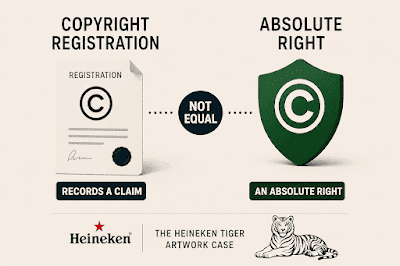
Copyright Registration vs. Ownership: The Heineken Tiger

Is a copyright registration proof of ownership? The Delhi High Court’s ruling in Heineken Asia Pacific v. Vijay Keshav Wagh confirms that copyright registration is merely an administrative record of a claim, not a definitive verdict on originality. This case highlights the critical importance of the proviso to Section 45 and the necessity of mandatory search certificates when registering label artwork. We examine why copyright and trademark law are not mutually exclusive and how brand owners can rectify a falsely obtained registration. Protect your intellectual property by understanding these essential legal safeguards today.

8 min read
patent

When Patent Offices Ignore Replies: A Procedural Guide

A recent Delhi High Court ruling has reaffirmed that the patent examination process is not merely a formality. When the Patent Office issues a rejection order that fails to engage with the applicant's responses, it violates fundamental principles of natural justice. This article analyzes the case of VIB VZW v. Controller of Patents, where the court set aside a flawed rejection. We break down the necessity of the five-step inventive step test and why applicants must document every argument to ensure a fair and reasoned decision-making process.

9 min read