This comprehensive roundup covers critical Indian IP law developments in July 2026, including landmark AI copyright rulings, trademark disputes, and patent updates.
The Delhi High Court rules that the Trade Marks Registry must apply the anti-dissection principle and clarifies that well-known mark status requires no prior declaration.
The Madras High Court recently granted an ad interim injunction against AI training using scraped content, highlighting a divergence from recent Delhi High Court rulings.
The Delhi High Court clarifies that a Rule 124 declaration is not a prerequisite for asserting well-known trademark status under Section 11(2) of the Trade Marks Act.
The Delhi High Court recently issued a landmark interim order in New Balance Athletics Inc. v. Astormueller AG, addressing the complex intersection of trademark infringement and passing off. While the court declined to enjoin all marks, it protected New Balance’s iconic 'N' branding against the defendant's 'n:' device. The judgment clarifies that prior registration does not shield a defendant from passing off claims and reiterates that secondary meaning is crucial for single-letter marks. This analysis breaks down the court’s reasoning on deceptive similarity, the 'n:' colon device, and well-known mark protections.
The Bombay High Court's ruling in Atyati v. Cognizant offers a masterclass in documenting independent creation for design marks. Justice Sharmila U. Deshmukh dismissed the copyright infringement suit, emphasizing that the 'reasonable opportunity of access' is a strict threshold that requires more than mere speculation. Furthermore, the court recognized reverse passing off as a viable legal claim in India, even while ruling against it on the facts. This decision is essential reading for companies undergoing rebrands, highlighting the importance of maintaining contemporaneous documentation to shield against claims of copying.
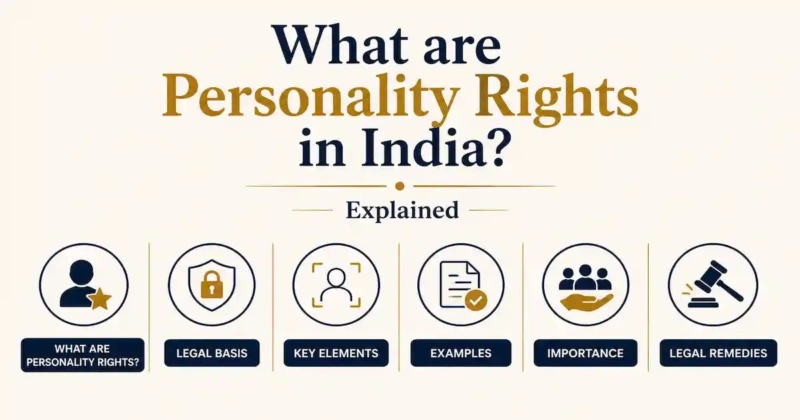
Personality rights in India have evolved rapidly, transforming from a privacy-based concept under Article 21 to a robust framework protecting digital personas. With no specific statute, courts have built protections using copyright, trademark law, and the IT Act to combat deepfakes, voice cloning, and unauthorized commercial exploitation. This article examines the shift from celebrity-focused litigation to the inclusion of medical professionals and content creators. We analyze the critical roles of John Doe orders and dynamic injunctions, while highlighting the increasing necessity for clear legislative intervention to standardize enforcement across Indian High Courts.
Understanding copyright infringement in India requires navigating complex principles like the originality threshold, the idea-expression dichotomy, and the scope of fair dealing. Courts assess infringement through the lens of a reasonable person, filtering out unprotectable elements such as historical facts or generic themes before comparing works. With the rise of digital piracy and AI, legal doctrines like dynamic injunctions and moral rights have become vital for creators. This guide breaks down the core legal frameworks that govern modern disputes, helping rights holders distinguish between actionable piracy and unavoidable similarities in shared subject matter.
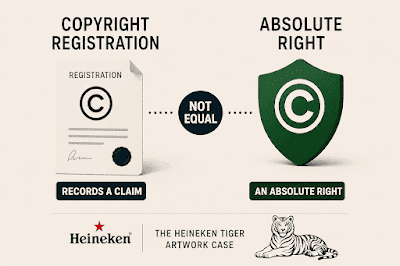
Is a copyright registration proof of ownership? The Delhi High Court’s ruling in Heineken Asia Pacific v. Vijay Keshav Wagh confirms that copyright registration is merely an administrative record of a claim, not a definitive verdict on originality. This case highlights the critical importance of the proviso to Section 45 and the necessity of mandatory search certificates when registering label artwork. We examine why copyright and trademark law are not mutually exclusive and how brand owners can rectify a falsely obtained registration. Protect your intellectual property by understanding these essential legal safeguards today.
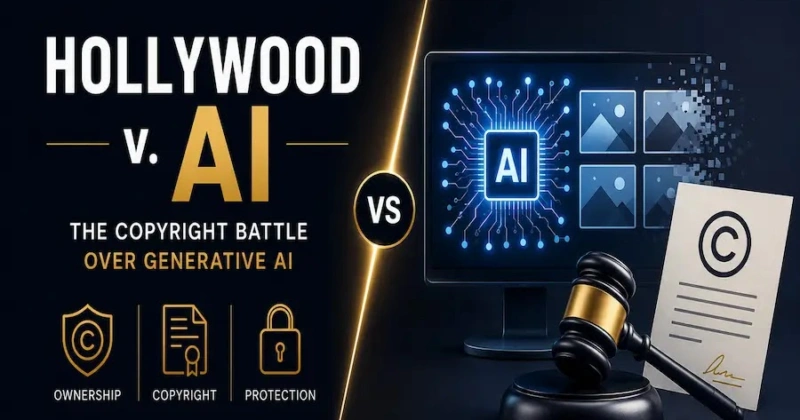
The MiniMax copyright lawsuit marks a pivotal moment for generative AI. Hollywood giants Disney, Universal, and Warner Bros have successfully pushed their infringement claims toward trial, challenging how AI companies train systems on unauthorized copyrighted works. A US federal judge recently denied MiniMax’s motion to dismiss, finding the studios' claims of direct and secondary infringement legally sufficient. With the case proceeding, the entertainment industry is closely watching whether AI training data practices will be ruled as copyright violation, setting a critical precedent for future global AI development.
•2 min read
Free Email Newsletter
Stay Ahead in IP Law with Its IP Time
Receive concise weekly and monthly IP Law updates.