This comprehensive roundup covers critical Indian IP law developments in July 2026, including landmark AI copyright rulings, trademark disputes, and patent updates.
The Delhi High Court rules that the Trade Marks Registry must apply the anti-dissection principle and clarifies that well-known mark status requires no prior declaration.
The Delhi High Court clarifies that a Rule 124 declaration is not a prerequisite for asserting well-known trademark status under Section 11(2) of the Trade Marks Act.
Stay updated with the latest Indian Intellectual Property developments from July 19 to July 25, 2026. This week’s digest covers critical rulings, including the Delhi High Court’s landmark dismissal of the interim injunction in ANI Media v. OpenAI, emphasizing the research exception in AI training. We also review significant decisions in trademark law regarding the 'OFFER' mark, copyright groundless threats involving TVS Motor, and dynamic injunctions against piracy. Additionally, catch up on GI tag updates from Haryana and Jharkhand and significant international developments involving the Digital Services Act and Anthropic.
In a significant ruling, the Delhi High Court restrained Veer Ji Malai Chaap from using footage of a supplier’s factory to promote its own brand. Justice Jyoti Singh’s interim order highlights the dangers of using contract manufacturing promotional material to create a false impression of ownership and hygiene standards. The court’s mandate for rapid content removal and its focus on consumer deception provide a vital lesson for franchise brands regarding trade secrets and attribution. This article explores the legal implications of misrepresentation and the protection of goodwill in the food industry.
The second week of July 2026 saw significant activity across Indian courts. Key rulings include the Delhi High Court's rejection of bioavailability as a basis for therapeutic efficacy in patent law and the Bombay High Court's crackdown on unsupported 'common general knowledge' claims by the Patent Office. We also cover the latest developments in trademark disputes, including the boAt v. BOULT matter and new injunctions against AI-driven copyright scraping. Stay updated on these essential legal developments and international IP cases, including the latest in the AstraZeneca and OpenAI litigations.
The Bombay High Court’s ruling in John Cockerill Hamon SA v. Hamon Cooling Systems addresses a critical issue for corporate law: what happens to trademark rights when a subsidiary is separated from its parent group? Justice Arif S. Doctor held that a licensee cannot claim independent proprietary rights over a mark used under permission. This case serves as a warning for companies navigating post-restructuring brand use, highlighting the dangers of inconsistent pleadings and the legal weight of admissions made before the Trademark Registry regarding prior ownership and brand usage.
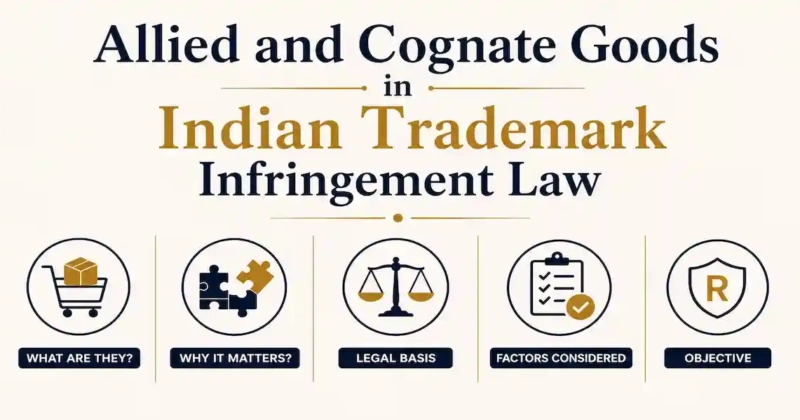
In Indian trademark law, class boundaries are often secondary to the actual commercial connection between products. The doctrine of allied and cognate goods allows brand owners to challenge infringements even when items fall into different Nice classes. From the landmark Corn Products case to the recent GODFATHER decision, courts focus on trade channels, consumer overlap, and product usage to determine risk. This article explores how courts apply the anti-dissection rule and multi-factor tests to protect brand equity, providing a roadmap for practitioners managing cross-class trademark conflicts.
The Bombay High Court has issued a permanent injunction in favor of Blue Cross Laboratories, halting the sale of 'MEFIAL-SPAS' by Alto Healthcare. This case serves as a masterclass in pharmaceutical IP enforcement, combining trademark infringement and copyright claims to protect a long-standing brand identity. With a significant cost award of Rs. 10 Lakhs, the court reaffirmed its strict stance against blatant imitators. This article examines the court’s application of the deceptive similarity test, the importance of registering packaging artwork, and the consequences of failing to contest commercial IP litigation.
The Bombay High Court has delivered a definitive ruling on trademark boundaries in the long-standing Indian Express family dispute. By upholding an injunction against Express Publications (Madurai), the court clarified that permitted users of a licensed mark cannot expand their commercial activities—such as ticketed events—beyond the specific geographic and functional scope defined by their consent decree. This analysis breaks down the legal principles of derivative marks, the binding force of court-recorded settlements, and why trademark licensees cannot operate outside the clear limitations of their agreements, regardless of their promotional aspirations.
•12 min read
Free Email Newsletter
Stay Ahead in IP Law with Its IP Time
Receive concise weekly and monthly IP Law updates.