An Advocate enrolled on the rolls of the Bar Council of the State of Andhra Pradesh. What started as curiosity about how the law protects ideas, brands, inventions, and creative works gradually developed into a genuine passion for studying and explaining IP law, inspiring me to pursue a Masters degree (LL.M.) in Intellectual Property Rights (IPR).
The Delhi High Court's ruling in K.K. Bansal v. Philips establishes a rigorous evidentiary standard for enforcing Standard Essential Patents (SEP) in India. Patent holders must prove essentiality through detailed claim charts mapping claims to technical specifications, comply with Section 45 of the Indian Evidence Act regarding expert testimony, and provide comparable licence agreements to establish FRAND rates. Furthermore, the court reinforced that international patent exhaustion under Section 107A(b) of the Patents Act prevents patentees from collecting royalties from downstream buyers once a licensed component enters the supply chain.
This week’s IP digest covers critical developments across Indian and international courts. Key highlights include the Bombay High Court's application of the 'bare possibility' test in pharmaceutical disputes and the Delhi High Court's landmark ruling on dynamic injunctions for live sports broadcasting. We also track the GI certification of Tezpur litchi, Google’s latest AI copyright defense, and the cancellation of the 'Glass Skin' trademark registration. From procedural registry updates to global AI patent litigation, this digest provides essential updates for practitioners tracking the rapidly evolving Intellectual Property landscape in India and abroad.
In Indian pharmaceutical trademark law, the 'bare possibility' test is the primary threshold for determining deceptive similarity. Because patient safety outweighs commercial interest, courts do not require proof of actual confusion or probability; they intervene if there is even a remote risk of error during prescription or dispensing. Applying the anti-dissection rule, courts assess marks as a whole rather than by syllable, ensuring that confusingly similar drug names are restrained even when they belong to different therapeutic classes or contain different active ingredients.
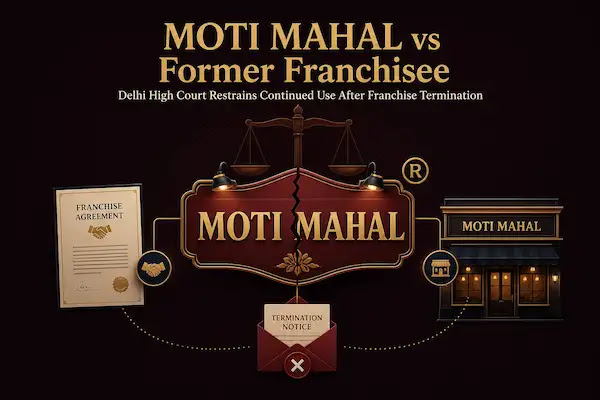
The Delhi High Court's ruling in the Moti Mahal trademark dispute underscores that post-termination use of a mark by a franchisee constitutes clear-cut infringement. By highlighting the strength of express contractual acknowledgment clauses in franchise agreements, the Court provided a robust mechanism for brand owners to secure immediate relief. The order serves as a definitive guide for protecting intellectual property within franchise networks, affirming that aggregators and digital platforms must also comply with takedown orders to prevent irreparable brand harm and consumer confusion in the hospitality sector.
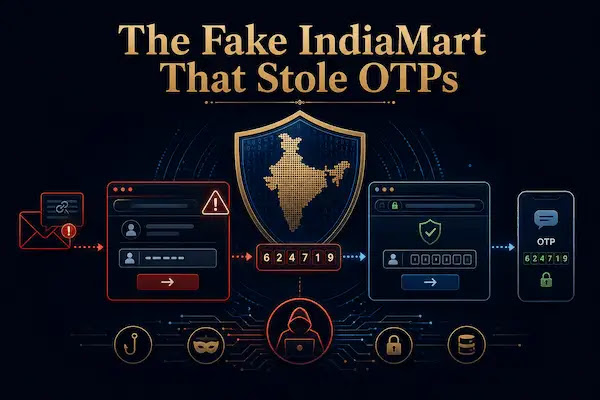
The Delhi High Court's recent IndiaMart injunction marks a major evolution in Indian IP enforcement by targeting the entire infrastructure of cyber fraud, including cloud hosts and telecom providers. By classifying website GUI as original artistic work under Section 2(c) of the Copyright Act and treating cloud platform infrastructure as an instrument of infringement, the Court has provided a robust framework for combatting OTP relay attacks. This order serves as a pivotal precedent for platform-wide protection and the accountability of digital intermediaries in preventing systemic trademark abuse.
Copyright infringement in India hinges on proving both the originality of the work—meeting the modicum of creativity threshold—and substantial similarity of protected expression rather than underlying ideas. Under the Copyright Act 1957, fair dealing is limited to specific categories like news reporting and research, excluding generic transformative use defenses found in other jurisdictions. Recent Delhi High Court jurisprudence, including dynamic injunctions against piracy and Section 60 relief against groundless threats, provides robust mechanisms for rights holders to protect digital assets and GUI designs from systematic imitation.
Publicly playing music in any commercial establishment constitutes a 'communication to the public' under the Copyright Act, 1957, requiring valid public performance licences from rights holders. The Bombay High Court confirmed that exclusive licensees, such as PPL, have the statutory standing to enforce these rights and seek injunctive relief without needing to be registered as a copyright society under Section 33. Consequently, commercial operators cannot use ambient music or third-party streaming subscriptions as a defense for unlicensed public playback, as these do not grant the necessary commercial performance authorizations.
A Geographical Indication (GI) tag in India protects a product's name and origin, but it does not grant a design monopoly or prevent global brands from reproducing traditional aesthetics. The Prada Kolhapuri chappal case demonstrates that current Indian law, under the GI Act 1999, fails to stop the appropriation of artisanal designs as long as the registered GI name is not explicitly misused. Without legislative reform, such as extending Article 23 protections to handicrafts, traditional cultural expressions remain legally vulnerable to foreign corporate exploitation despite existing GI protections.
The ANI v. OpenAI litigation places Section 52 of the Copyright Act 1957 at the center of India's AI regulatory debate. With the Delhi High Court weighing whether unlicensed training of large language models on copyrighted news content constitutes fair dealing, the outcome will dictate the future of generative AI in India. While the DPIIT explores compulsory licensing, the current impasse highlights the legislative gap left by the 2012 amendment. Simultaneously, the Thaler application regarding AI authorship challenges the interpretation of Section 2(d)(vi) for autonomous, non-prompted machine outputs.
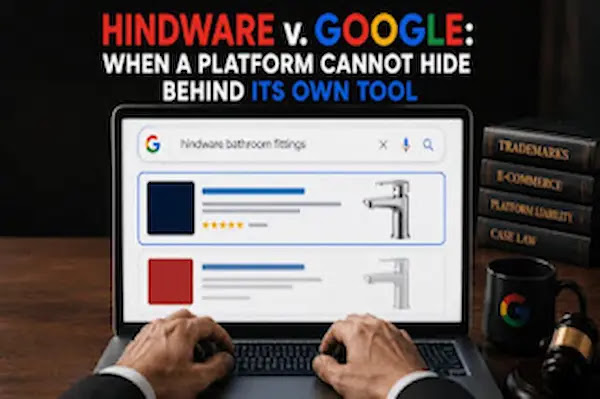
The Delhi High Court has established that Google is liable for trademark infringement when it auctions coined, registered trademarks as keywords to direct competitors. By actively selecting and monetising these marks, Google forfeits its safe harbour protection under the IT Act. This landmark ruling clarifies that invisible backend bidding constitutes use in advertising under Section 29(6)(d) of the Trade Marks Act 1999. Rights holders can now hold platforms directly accountable for exploiting brand equity, regardless of whether the trademark appears in the visible sponsored advertisement text.
•11 min read
Free Email Newsletter
Stay Ahead in IP Law with Its IP Time
Receive concise weekly and monthly IP Law updates.