designs
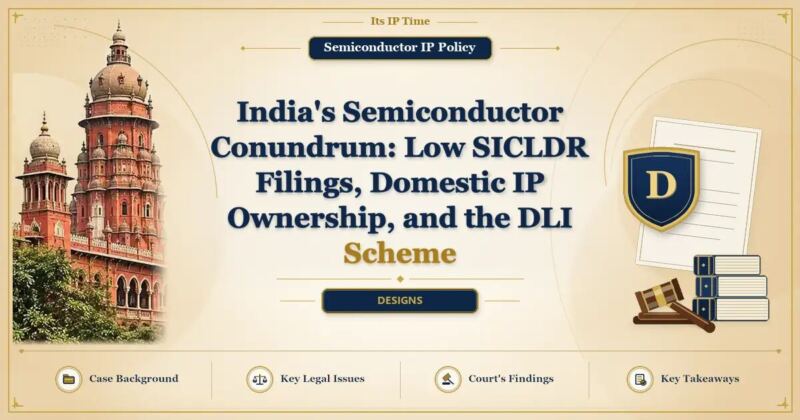
India’s Semiconductor Conundrum: Low SICLDR Filings, Domestic IP Ownership, and the DLI Scheme
Why are SICLDR filings low under the SICLD Act 2000 despite the India Semiconductor Mission? Analysis of domestic IP ownership and the DLI Scheme.
Browse the archive
The Designs section covers the legal protection, registration, and enforcement of industrial designs under the Indian Designs Act 2000 and the Designs Rules 2001. Our analysis focuses on judicial interpretations of novelty, originality, and prior publication, alongside practical strategies for overcoming novelty objections raised by the Patent Office.
We track key High Court rulings on design piracy, interim injunction standards in design infringement suits, the statutory interplay between Section 15 of the Copyright Act and the Designs Act, and procedural requirements for design cancellation petitions before the High Courts and Controller General.
Why are SICLDR filings low under the SICLD Act 2000 despite the India Semiconductor Mission? Analysis of domestic IP ownership and the DLI Scheme.
Step-by-step industrial design registration under the Designs Act, 2000: Form 1 filing, Locarno classes, Section 4 novelty, 15-year term, and Section 15(2) overlap.
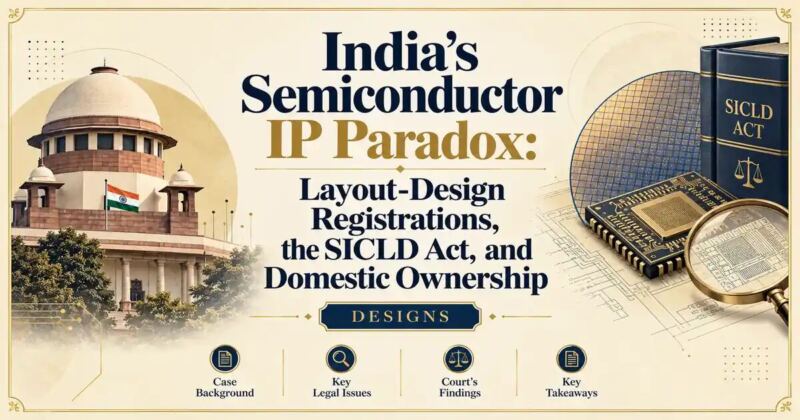
An analysis of India's Semiconductor Integrated Circuits Layout-Design Act (SICLD Act 2000), examining why layout-design registrations remain low despite the India Semiconductor Mission and exploring domestic IP ownership.
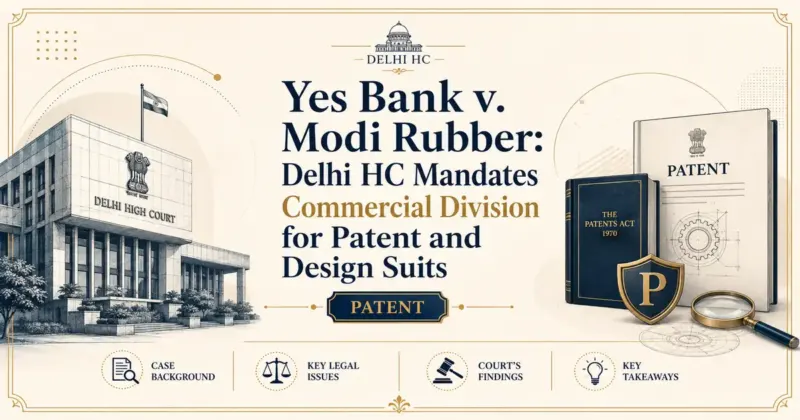
The Delhi High Court has confirmed that all patent and design infringement suits must be adjudicated by the Commercial Division of the High Court to ensure specialized oversight. In Yes Bank v. Modi Rubber, the bench held that Section 104 of the Patents Act 1970 and the Designs Act 2000 are inextricably linked to the Commercial Courts Act 2015. This procedural mandate streamlines litigation, ensuring that complex technical disputes are handled by benches equipped for commercial matters, thereby reducing jurisdictional ambiguity and fostering consistent judicial administration for intellectual property rights nationwide.
The Delhi High Court’s ruling in Crocs v. Bata reinforces that actual litigation costs in commercial disputes must reflect real expenses incurred, effectively deterring frivolous IP litigation. By awarding Rs. 24.63 lakh in costs under Section 35 of the Code of Civil Procedure and the Commercial Courts Act, the Court has signaled that losing parties cannot expect token penalties. This decision shifts the economic burden of protracted design battles, compelling litigants to verify the novelty and registrability of their IP under the Designs Act 2000 before initiating enforcement proceedings.