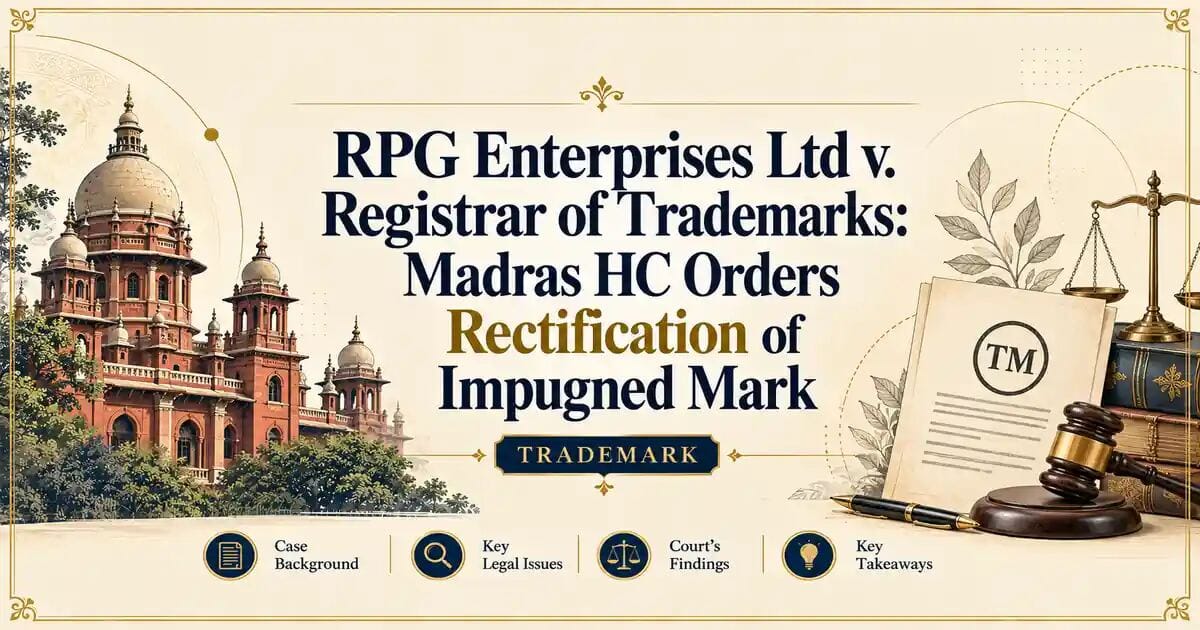
The High Stakes of “RPG”: Madras High Court on Rectification and Prior Use
Brand protection often hinges on the distinction between a descriptive identity and a well-known legacy. In the matter of RPG Enterprises Limited Vs The Registrar of Trademarks, the Madras High Court faced a classic conflict. A corporate giant sought to purge the register of a smaller entity’s mark. The dispute highlights the persistent tension between the statutory rights of a registered proprietor and the broader doctrine of deceptive similarity.
The petitioner, RPG Enterprises Limited, approached the court under Section 57 of the Trade Marks Act, 1999. This provision allows an aggrieved party to seek the cancellation or variation of a trademark entry. The core of their grievance? The registration of the mark “RPG MARBLE PVT. LTD.” held by the second respondent. The petitioner argued that this registration infringed upon their established rights, asserting that their “RPG” mark had attained the status of a well-known trademark through years of extensive, continuous use.
Dispute Before the Court
At the heart of the conflict lies the protection of the “RPG” brand. The petitioner argued that their mark holds a unique position in the minds of the public. They maintained that allowing the second respondent to continue using “RPG MARBLE PVT. LTD.” would inevitably lead to market confusion. The petitioner further pointed to their status as the registered proprietor of several marks featuring the expression “RPG,” alongside their copyright holdings in the “RPG Enterprises Logo.”
The legal narrative presented by the petitioner reached back to 2018. They had previously instituted proceedings before a civil court in Bengaluru, seeking a permanent injunction against the respondents. This history of litigious pursuit underscored their commitment to maintaining the integrity of their brand identity. They argued that the Registrar of Trademarks erred by permitting the impugned mark to persist on the register, effectively enabling the second respondent to trade on the petitioner’s goodwill.
Parties’ Contentions
Counsel for the petitioner argued that the impugned mark is visually, phonetically, and conceptually identical to their own. The argument relied heavily on the likelihood of confusion among average consumers. They emphasized the doctrine of imperfect recollection, suggesting that a customer with average intelligence would fail to distinguish between the two marks. The petitioner’s position remained clear: the dominant and essential features of their mark were being appropriated.
The petitioner’s strategy also involved highlighting their status as a well-known mark holder. They contended that their marks are ubiquitous in the marketplace and that the Registrar of Trademarks should have recognized this when evaluating the respondent’s application. They maintained that the continued presence of the impugned mark on the register creates a false impression of an association between the two entities, which does not exist in reality.
The respondents, conversely, relied on the existing registration of their mark. Their defense centered on the legitimacy of their entry on the Trade Mark Register. By framing their use of “RPG” as part of a distinct corporate identity, they attempted to shield their mark from the claims of deceptive similarity. The court, however, had to weigh these arguments against the backdrop of statutory protections for established, well-known brand identities.
Court’s Approach
The court adopted a rigorous, analytical path to address the rectification petition. It focused on whether the registered mark in question met the thresholds for validity under the Trade Marks Act. Central to this inquiry was the assessment of whether the mark was truly distinctive or if it leaned too heavily into the petitioner’s established territory.
Justice observed the following regarding the impact of the impugned registration:
This observation indicates that the court was not buying the argument that the two marks could coexist without harming the petitioner’s rights. By focusing on the potential for consumer confusion, the court validated the petitioner’s claim of deceptive similarity. It scrutinized the visual and phonetic components of the mark, finding that the overlap was substantial enough to warrant intervention.
Order and Directions
The court’s order was decisive. Recognizing the merit in the petitioner’s argument regarding the likelihood of confusion, it addressed the need for rectification. The bench underscored that the register must accurately reflect the rights of entities to avoid public deception. Consequently, it provided specific directions aimed at clearing the register of the contested mark.
The order mandates the removal of the respondent’s mark from the register maintained by the Registrar of Trademarks. This action serves as a finality to the rectification petition filed under Section 57. The ruling effectively halts the respondent’s ability to rely on that specific trademark registration to support their commercial activities going forward.
What the Order Means
For IP litigators and corporate counsel, this order serves as a reminder of the weight courts place on brand legacy and well-known status. It confirms that mere registration is not an absolute shield if the mark fundamentally conflicts with an established, well-recognized brand. The ruling shifts the burden back onto the applicant to ensure that their chosen identity does not tread upon the established goodwill of others.
The status quo for the parties has fundamentally changed. The respondent no longer holds the protection of a registered trademark for their specific mark, leaving them vulnerable to further claims of infringement if they continue to use it. For the petitioner, this is a significant validation of their brand protection strategy. It affirms that their history of vigilance, including the 2018 civil proceedings in Bengaluru, contributes to their standing in subsequent rectification efforts.
Ultimately, this case acts as a practical lesson in trademark due diligence. Companies must recognize that the registry is not the final arbiter of rights. The court maintains the authority to rectify the register to protect the public and honest traders from confusion. Practitioners should take note: the strength of one’s mark, when combined with consistent and timely legal action, remains the most effective weapon in the corporate legal arsenal against brand dilution.
Case Details: RPG Enterprises Limited Vs The Registrar of Trademarks | Case Number: (T)OP(TM).482/2023 | Court: Madras High Court | Date: 26-09-28