An Advocate enrolled on the rolls of the Bar Council of the State of Andhra Pradesh. What started as curiosity about how the law protects ideas, brands, inventions, and creative works gradually developed into a genuine passion for studying and explaining IP law, inspiring me to pursue a Masters degree (LL.M.) in Intellectual Property Rights (IPR).
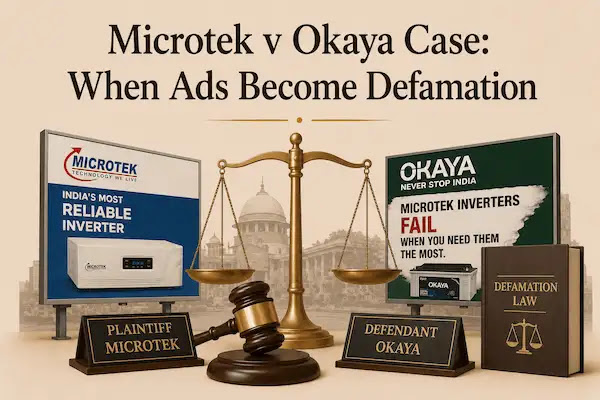
Comparative advertising crosses the threshold into disparagement and trade libel when it relies on fabricated factual claims, such as falsifying court-ordered seizures or misrepresenting a competitor's legal status. Under the Trade Marks Act 1999, Sections 29(8) and 30(1) permit honest comparisons but withdraw safe harbor protections for campaigns that denigrate a rival's reputation through verifiable lies. The Delhi High Court’s swift intervention underscores that digital distribution of false narratives—including via WhatsApp and social media—subjects dealers and employees to immediate injunctive relief and potential liability for trade libel.
This week's IP law digest covers critical developments in Indian jurisprudence. The Bombay High Court affirmed territorial restrictions for media brands, while the Delhi High Court clarified the limits of contempt jurisdiction regarding keyword ads on Google. We also explore significant rulings on patent examination, comparative advertising, and personality rights, including Preity Zinta's move against AI deepfakes. Internationally, the US Supreme Court's decision on skinny labels and new patent rulings from the UPC and China highlight the evolving landscape of global intellectual property enforcement and strategic brand protection.
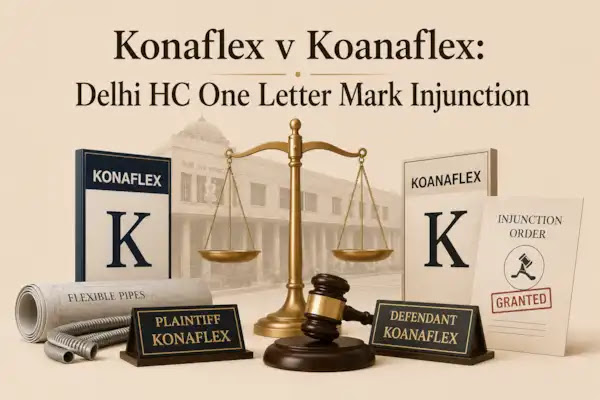
Trademark infringement in India does not require identity; phonetic and visual similarity, especially in oral trade, creates deceptive similarity. The Delhi High Court confirmed that minor variations, such as inserting a single letter, fail to distinguish coined marks when the underlying trade context is prone to oral confusion. In pharmaceutical and industrial sectors where ordering occurs via verbal communication, courts apply the test of the ordinary, hurried purchaser. Trademark protection for coined marks remains robust, as these rely entirely on sound and shape to anchor consumer brand memory.
A court-ordered remand to the Indian Patent Office for a fresh hearing does not grant the Controller a license to conduct a de novo examination or introduce new prior art. The Bombay High Court has ruled that unless explicitly authorized, a remand triggered by natural justice violations restricts the Controller to clarifying existing objections on the record. This ensures procedural fairness under the Patents Act, preventing the Patent Office from using a limited remand as a mechanism to relitigate an application beyond its original scope.
Using the Instagram music library for brand promotional content constitutes unauthorized commercial exploitation of sound recordings, violating the owner's exclusive rights under the Copyright Act 1957. While platforms provide technical access to music, this does not grant a synchronization license for commercial advertising or brand marketing. Recent judicial trends, including the Delhi High Court's stance in Zee vs. Libas, confirm that fair dealing exceptions are inapplicable to commercial activities, necessitating that brands secure direct licenses from copyright owners to avoid infringement litigation and significant liability for damages.
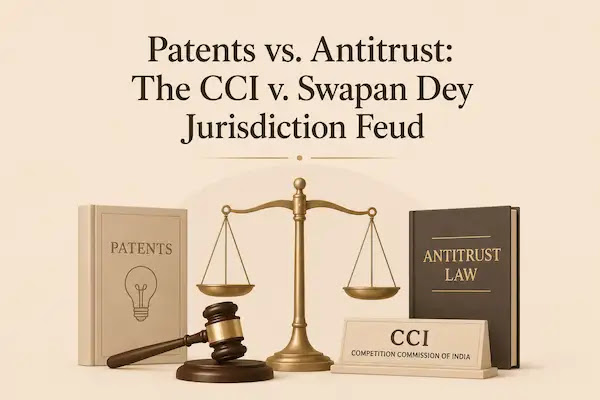
The Supreme Court of India in CCI v. Swapan Dey is currently determining whether the Competition Commission of India (CCI) holds jurisdiction over anti-competitive practices tied to patent rights. While the NCLAT previously argued that the Patents Act 1970 operates as a self-contained code, the Supreme Court has stayed this exclusion, signaling that patent exclusivity cannot shield owners from antitrust scrutiny. This case is pivotal for clarifying how Section 3(5) of the Competition Act interacts with patent monopolies to prevent the abuse of a dominant position in Indian pharmaceutical markets.
Trademark rights derived from settlement agreements and consent decrees are strictly governed by their explicit territorial and functional scope. The Bombay High Court in Indian Express v. Express Publications (Madurai) ruled that a permitted user cannot unilaterally expand trademark use to commercial events outside designated regions. The decision underscores that adding prefixes like 'New' to a registered mark does not grant independent proprietary rights that bypass the terms of a court-recorded agreement. Contractual limits on licensing are binding, and courts will narrowly construe derivative usage in family business splits.
In a landmark ruling, the Delhi High Court established the 'Dartboard Model' to penalize speculative prior art challenges in patent litigation. The case of Communication Components Antenna Inc. v. Rosenberger affirms that computational MATLAB simulations serve as legally sufficient proof of infringement when physical product access is denied. By applying a royalty-based damages framework with a bad-faith uplift, the court provided a clear roadmap for quantifying relief in oligopolistic markets. This judgment significantly strengthens the enforcement of technology patents in India, emphasizing objective evidence over scattershot defense strategies.
The Delhi High Court has affirmed that descriptive terms like GLASS SKIN cannot be monopolised as trademarks under Section 9(1)(b) of the Trade Marks Act 1999. In a significant win for fair competition, the court cancelled a registration that hindered legitimate trade usage. This ruling emphasizes that popular lifestyle or industry vocabulary remains in the public domain and cannot be fenced off by a single player without proof of distinct secondary significance. Businesses should rely on established trademarks, not generic product descriptors, to avoid costly litigation and potential registration cancellation.
Dynamic injunctions have become the gold standard for protecting live broadcast rights under Section 37 of the Copyright Act, 1957. In Zee Entertainment v. Soccerbox, the Delhi High Court confirmed that these orders extend to mirror sites, redirect URLs, and mobile applications, allowing rights-holders to block infringing content in real-time. This judicial approach addresses the temporal nature of piracy, ensuring that exclusive broadcast reproduction rights are not rendered otiose during major events. The ruling reinforces that prior piracy patterns justify proactive, site-wide enforcement across ISPs and mobile ecosystems.
•7 min read
Free Email Newsletter
Stay Ahead in IP Law with Its IP Time
Receive concise weekly and monthly IP Law updates.