An Advocate enrolled on the rolls of the Bar Council of the State of Andhra Pradesh. What started as curiosity about how the law protects ideas, brands, inventions, and creative works gradually developed into a genuine passion for studying and explaining IP law, inspiring me to pursue a Masters degree (LL.M.) in Intellectual Property Rights (IPR).
June 2026 was a landmark month for Indian Intellectual Property law, marked by significant rulings from the Delhi High Court and beyond. From expanded liability for advertising platforms in keyword bidding cases to the formal recognition of PPL India as a copyright society, the developments are far-reaching. We explore crucial updates in trademark, patent, copyright, and geographical indication laws. This digest breaks down essential case law, including landmark decisions on personality rights and AI, helping practitioners stay updated with the rapidly evolving Indian legal landscape across all key IP sectors.
Trademark registration for a composite mark does not grant automatic exclusivity over a word buried within it unless that component is used independently. A registration without actual commercial use is essentially a 'paper mark' that remains vulnerable to expungement under Section 47 of the Trade Marks Act. Courts require tangible evidence, such as invoices, to prove the standalone use of a mark. Intellectual property owners should not rely on legal fictions; they must demonstrate consistent, independent market presence to defeat rectification petitions from established prior users.
Section 9 of the Trade Marks Act 1999 mandates that a mark must possess inherent distinctiveness to be registrable. Objections under Section 9(1)(a) for non-distinctiveness, Section 9(1)(b) for descriptiveness, and Section 9(1)(c) for customary trade usage pose significant hurdles that cannot be ignored. However, the proviso to Section 9(1) offers a critical path to registration if applicants can prove acquired distinctiveness through extensive evidence of use prior to the filing date. Distinguishing between absolute and relative grounds is essential for crafting a successful response to examination reports.
This week's IP digest covers crucial Indian judicial developments, including the Delhi High Court's ruling on the Godfather trademark case, confirming that registered marks remain enforceable despite non-use. We explore critical patent insights from Shaafi Naturcure, where post-filing evidence was rejected, and Fraunhofer’s failed biomass patent. The digest also reviews high-stakes copyright battles, trademark rectification petitions involving 'Shakti', and the prestigious induction of Justice Prathiba M. Singh into the International IP Hall of Fame. Additionally, we analyze global IP trends, including US pharmaceutical patent disputes and CJEU platform liability rulings concerning algorithmic content curation.
National Biodiversity Authority (NBA) approval provides no legal nexus to patentability under the Patents Act, 1970. The Delhi High Court in Shaafi Naturcure LLP v. Assistant Controller of Patents and Designs confirmed that compliance with the Biological Diversity Act, 2002 does not satisfy the requirements for inventive step or Section 3(p) traditional knowledge exclusions. Patent applicants in the herbal medicine sector must establish synergy within the complete specification; post-filing affidavits cannot compensate for inherent disclosure gaps. Demonstrable technical efficacy remains the bedrock for valid patent protection in India.
A registered trademark proprietor maintains an exclusive, enforceable right under Section 28 of the Trade Marks Act 1999 even without continuous use, preventing competitors from exploiting their brand. The Delhi High Court confirmed that beer and whisky qualify as allied and cognate goods due to shared retail channels and regulatory frameworks. Furthermore, the anti-dissection rule cannot be used to insulate a dominant, registered word mark from infringement simply by embedding it within a composite label or adding celebrity endorsements, as such cosmetic changes fail to prevent consumer confusion.
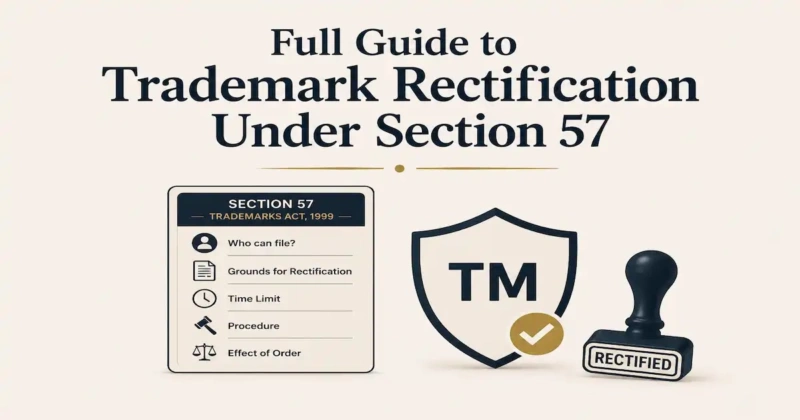
Trademark rectification under Section 57 of the Trade Marks Act 1999 is the primary legal mechanism for aggrieved parties to challenge fraudulently registered or unused marks. Following the abolition of the IPAB, jurisdiction is strictly determined by the registry that processed the impugned entry, though courts now pragmatically apply the principle of forum conveniens to consolidate parallel proceedings. To successfully invoke Section 57, a petitioner must establish a clear nexus as an aggrieved person and navigate the mandatory Section 124 procedural requirements when an infringement suit is already pending before the High Court.
The Delhi High Court has reaffirmed that the Trade Marks Registry must pass reasoned, speaking orders that substantively engage with an applicant's arguments. Failing to address specific submissions in an examination reply violates the principles of natural justice, rendering the refusal order legally untenable. Registrars must conduct a holistic assessment of a mark as a whole, rather than dissecting it, and evaluate distinctiveness specifically in relation to the goods applied for. This precedent mandates that the Registry move beyond boilerplate objections to provide transparent, reviewable justifications for all trademark registration denials.
A trademark owner cannot hold an advertising platform in contempt for failing to proactively monitor third-party ads unless a court order explicitly mandates such surveillance. While platforms must adhere to their stated policies regarding trademark protection, the Delhi High Court clarifies that in India, these obligations are complaint-driven rather than automated. Litigants must ensure that any settlement or judicial undertaking is translated into an express operative direction within the final order, as contempt jurisdiction is strictly limited to the breach of explicit judicial mandates, not merely private policy commitments.
Pharmaceutical brand owners can effectively protect their market position by coupling trademark registrations with copyright protection for packaging artwork. In cases of blatant imitation, Indian courts prioritize the 'average consumer' test, finding deceptive similarity where there is phonetic and visual overlap. Defendants who fail to contest proceedings reinforce the presumption of dishonesty. Under the Commercial Courts Act, 2015, IP owners should proactively lead evidence on actual damages to move beyond nominal costs, ensuring their long-term investment in trade dress and brand identity is fully judicially recognized.
•10 min read
Free Email Newsletter
Stay Ahead in IP Law with Its IP Time
Receive concise weekly and monthly IP Law updates.