Skip to content
Subscribe

Browse the archive

Category: Copyright

Copyright

Criminal Copyright Enforcement: Madras HC on Infringement Trials

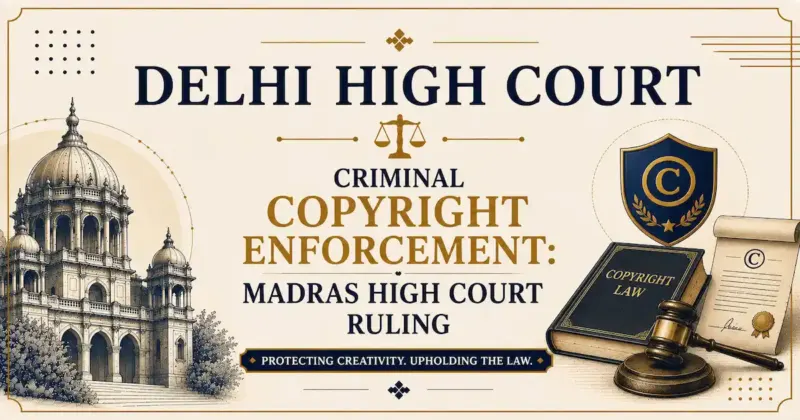
Criminal copyright enforcement in India does not require proof of the complainant's personal ownership if the alleged offence is properly disclosed under the Copyright Act 1957. The Madras High Court has affirmed that locus standi is generally not a bar to criminal proceedings, and that questions of mens rea or licensing are matters for trial rather than pre-trial quashing petitions. By applying the test of substantial similarity, courts prioritize protecting creative expression over technical objections, supporting the efficacy of specialised IP enforcement units in handling counterfeit trade dress cases.
8 min read
Copyright

TVS Motor v. Maurya: Delhi HC Curbs Groundless IP Threats

Groundless threats of copyright infringement are not legally sustainable when the claimant fails to identify specific expression rather than just underlying ideas. The Delhi High Court ruling in TVS Motor v. Ram Chandra Maurya affirms that repeatedly issuing notices for rejected claims qualifies as harassment, not litigation. To survive a Section 60 Copyright Act challenge, a notice must prove actual copying of expression. This judgment serves as a protective benchmark for Indian manufacturers facing persistent, bad-faith copyright threats regarding mechanical designs or industrial processes that do not infringe protected literary works.

8 min read
Copyright

Dynamic Anti-Piracy Blocking Orders in Madras High Court

Dynamic anti-piracy injunctions have become an essential procedural tool for protecting Indian cinema revenue during the critical opening weeks of a film's release. By allowing plaintiffs to notify ISPs of newly discovered mirror sites without recurring court appearances, the Madras High Court in Zee Entertainment v. BSNL demonstrates how judicial intervention addresses the rapid proliferation of pirate links. These quia timet orders, supported by CBFC certification and indemnity conditions, ensure that copyright holders can act effectively against digital infringement while maintaining procedural fairness for all internet service providers involved.

8 min read
Copyright

Keshan Infotech vs Oliver Brandt: AI Training and Copyright Law

The conflict between the Madras High Court in Keshan Infotech and the Delhi High Court in ANI Media reveals a judicial divide on AI training copyright. While ANI suggests fair dealing under Section 52 for LLM development, Keshan Infotech granted an interim injunction against scraping for AI training. This divergence highlights that courts weigh procedural posture and specific evidence of misappropriation—such as logo retention—differently. For Indian litigants, the current landscape necessitates a fact-specific approach, as the definitive legal framework for AI data usage remains under active judicial development.

8 min read
Copyright

AI Training is Fair Dealing: Delhi HC on ANI v. OpenAI

The Delhi High Court's ruling in ANI v. OpenAI clarifies that training Large Language Models (LLMs) on publicly available data qualifies as 'fair dealing' under Section 52(1)(a) of the Copyright Act, 1957. The court rejected an interim injunction, holding that such training is transformative, socially beneficial, and does not constitute a market substitute for news content. Crucially, it established that 'research' exceptions are not limited to non-commercial contexts or human actors. This decision provides significant legal breathing room for AI development in India while maintaining existing protections against literal reproduction.

10 min read
Copyright

Atyati v. Cognizant: Bombay HC on Reverse Passing Off and Logos

Establishing copyright infringement requires proving a reasonable opportunity of access, not merely a theoretical possibility. The Bombay High Court ruled that large multinational corporations cannot be assumed to have copied a logo based on workforce size, emphasizing that contemporaneous evidence of independent creation—such as design briefs, time logs, and market surveys—is essential for defense. Furthermore, while the Court acknowledged reverse passing off as a valid claim under Section 27(2), it maintained that such a claim fails if the senior user lacks distinct, standalone goodwill in the logo itself.

8 min read
Copyright

Zee vs. Libas: Instagram Music and Commercial Copyright Risks

Using the Instagram music library for brand promotional content constitutes unauthorized commercial exploitation of sound recordings, violating the owner's exclusive rights under the Copyright Act 1957. While platforms provide technical access to music, this does not grant a synchronization license for commercial advertising or brand marketing. Recent judicial trends, including the Delhi High Court's stance in Zee vs. Libas, confirm that fair dealing exceptions are inapplicable to commercial activities, necessitating that brands secure direct licenses from copyright owners to avoid infringement litigation and significant liability for damages.

11 min read
Copyright

Delhi HC Expands Dynamic Injunctions to Mobile Apps

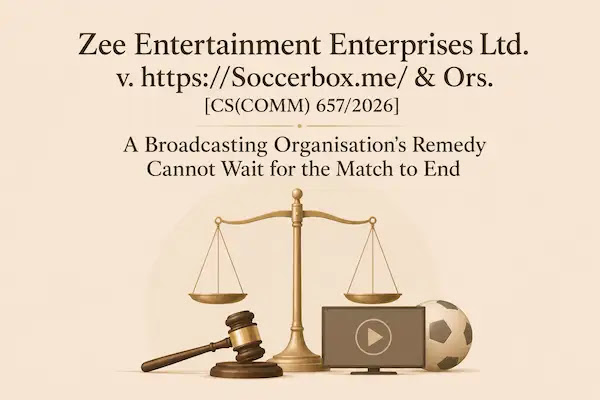
Dynamic injunctions have become the gold standard for protecting live broadcast rights under Section 37 of the Copyright Act, 1957. In Zee Entertainment v. Soccerbox, the Delhi High Court confirmed that these orders extend to mirror sites, redirect URLs, and mobile applications, allowing rights-holders to block infringing content in real-time. This judicial approach addresses the temporal nature of piracy, ensuring that exclusive broadcast reproduction rights are not rendered otiose during major events. The ruling reinforces that prior piracy patterns justify proactive, site-wide enforcement across ISPs and mobile ecosystems.

7 min read
Copyright

IndiaMart Phishing Injunction: Delhi HC Tackles Cyber Fraud

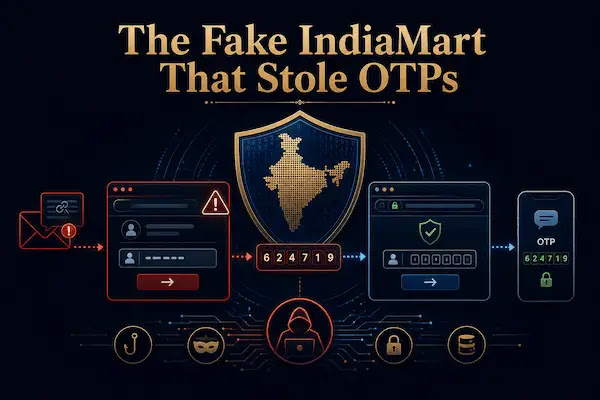
The Delhi High Court's recent IndiaMart injunction marks a major evolution in Indian IP enforcement by targeting the entire infrastructure of cyber fraud, including cloud hosts and telecom providers. By classifying website GUI as original artistic work under Section 2(c) of the Copyright Act and treating cloud platform infrastructure as an instrument of infringement, the Court has provided a robust framework for combatting OTP relay attacks. This order serves as a pivotal precedent for platform-wide protection and the accountability of digital intermediaries in preventing systemic trademark abuse.

10 min read
Copyright

Enforcing Copyrights: Strategies Against Infringement in India

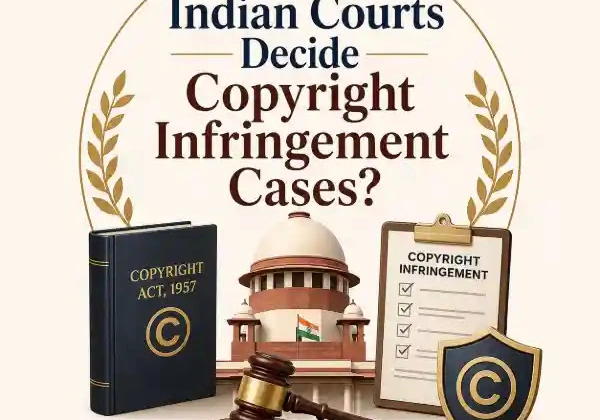
Copyright infringement in India hinges on proving both the originality of the work—meeting the modicum of creativity threshold—and substantial similarity of protected expression rather than underlying ideas. Under the Copyright Act 1957, fair dealing is limited to specific categories like news reporting and research, excluding generic transformative use defenses found in other jurisdictions. Recent Delhi High Court jurisprudence, including dynamic injunctions against piracy and Section 60 relief against groundless threats, provides robust mechanisms for rights holders to protect digital assets and GUI designs from systematic imitation.

12 min read