Skip to content
Subscribe

Browse the archive

Category: trademark

trademark

Blue Cross v. Alto: Bombay HC Slaps 10 Lakhs on Infringers

Pharmaceutical brand owners can effectively protect their market position by coupling trademark registrations with copyright protection for packaging artwork. In cases of blatant imitation, Indian courts prioritize the 'average consumer' test, finding deceptive similarity where there is phonetic and visual overlap. Defendants who fail to contest proceedings reinforce the presumption of dishonesty. Under the Commercial Courts Act, 2015, IP owners should proactively lead evidence on actual damages to move beyond nominal costs, ensuring their long-term investment in trade dress and brand identity is fully judicially recognized.
10 min read
trademark

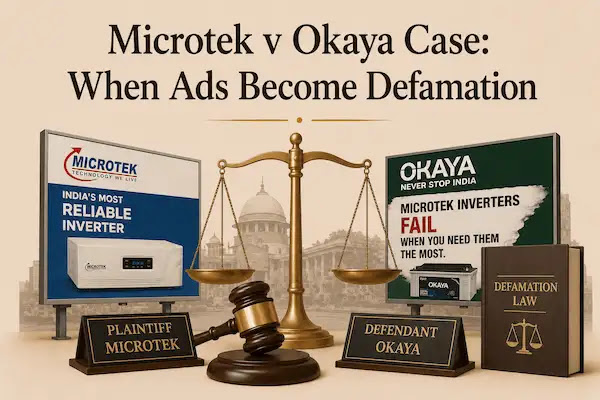
Microtek v. Okaya: Delhi HC Rebukes Trademark Disparagement

Comparative advertising crosses the threshold into disparagement and trade libel when it relies on fabricated factual claims, such as falsifying court-ordered seizures or misrepresenting a competitor's legal status. Under the Trade Marks Act 1999, Sections 29(8) and 30(1) permit honest comparisons but withdraw safe harbor protections for campaigns that denigrate a rival's reputation through verifiable lies. The Delhi High Court’s swift intervention underscores that digital distribution of false narratives—including via WhatsApp and social media—subjects dealers and employees to immediate injunctive relief and potential liability for trade libel.

10 min read
trademark

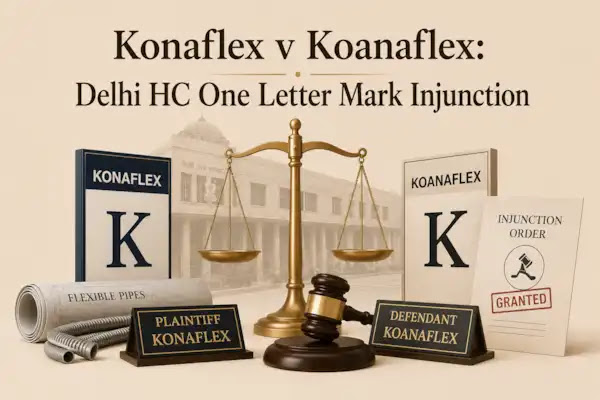
Konaflex v. Koanaflex: Delhi HC Cancels Trademark Due to Confusion

Trademark infringement in India does not require identity; phonetic and visual similarity, especially in oral trade, creates deceptive similarity. The Delhi High Court confirmed that minor variations, such as inserting a single letter, fail to distinguish coined marks when the underlying trade context is prone to oral confusion. In pharmaceutical and industrial sectors where ordering occurs via verbal communication, courts apply the test of the ordinary, hurried purchaser. Trademark protection for coined marks remains robust, as these rely entirely on sound and shape to anchor consumer brand memory.

7 min read
trademark

Bombay HC Restrains ‘New Indian Express’ Mumbai Operations

Trademark rights derived from settlement agreements and consent decrees are strictly governed by their explicit territorial and functional scope. The Bombay High Court in Indian Express v. Express Publications (Madurai) ruled that a permitted user cannot unilaterally expand trademark use to commercial events outside designated regions. The decision underscores that adding prefixes like 'New' to a registered mark does not grant independent proprietary rights that bypass the terms of a court-recorded agreement. Contractual limits on licensing are binding, and courts will narrowly construe derivative usage in family business splits.

12 min read
trademark

Delhi High Court Cancels Descriptive ‘GLASS SKIN’ Trademark

The Delhi High Court has affirmed that descriptive terms like GLASS SKIN cannot be monopolised as trademarks under Section 9(1)(b) of the Trade Marks Act 1999. In a significant win for fair competition, the court cancelled a registration that hindered legitimate trade usage. This ruling emphasizes that popular lifestyle or industry vocabulary remains in the public domain and cannot be fenced off by a single player without proof of distinct secondary significance. Businesses should rely on established trademarks, not generic product descriptors, to avoid costly litigation and potential registration cancellation.

10 min read
trademark

Export Infringement: Madras HC Rules on Trademark Affixation

The Madras High Court has definitively ruled that affixing a trademark in India on goods destined for export constitutes trademark use under the Trade Marks Act 1999. This judgment in V.V.V. & Sons Edible Oils Ltd. v. Meenakshi Overseas LLC clarifies that Indian trademark owners can initiate infringement proceedings against domestic manufacturers even if the products are not sold in the local market. The act of application is sufficient to establish a cause of action, overriding arguments that domestic consumer exposure is necessary for trademark infringement claims in India.

9 min read
trademark

Registry Fails Notice Duty: Rajinder Singh Trademark Case

The Delhi High Court has reinforced that the Trade Marks Registry cannot rely on its own procedural failures to extinguish a proprietor's rights. Under Section 25(3) of the Trade Marks Act 1999, the Registrar has a mandatory obligation to issue valid renewal notices. When the Registry fails to serve the O-3 notice at the correct address, the resulting lapse is legally void. This decision protects long-standing brand owners from losing their registration due to administrative oversight, confirming that statutory duties of government authorities are not discretionary.

8 min read
trademark

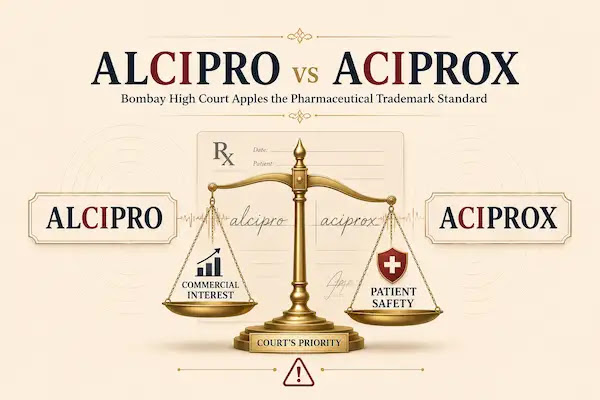
Bombay HC on Pharma Trademarks: The Bare Possibility Test

In Indian pharmaceutical trademark law, the 'bare possibility' test is the primary threshold for determining deceptive similarity. Because patient safety outweighs commercial interest, courts do not require proof of actual confusion or probability; they intervene if there is even a remote risk of error during prescription or dispensing. Applying the anti-dissection rule, courts assess marks as a whole rather than by syllable, ensuring that confusingly similar drug names are restrained even when they belong to different therapeutic classes or contain different active ingredients.

9 min read
trademark

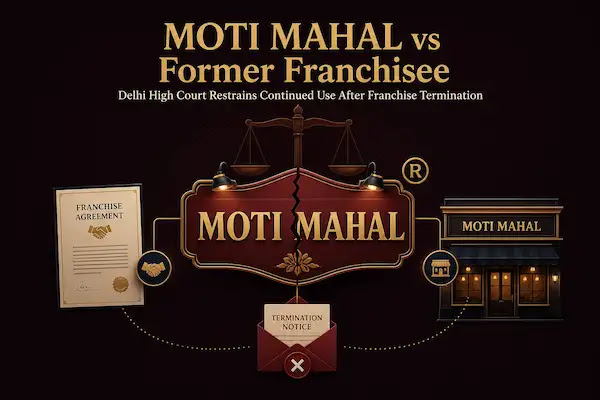
Moti Mahal Trademark Dispute: Enforcing Franchisee Compliance

The Delhi High Court's ruling in the Moti Mahal trademark dispute underscores that post-termination use of a mark by a franchisee constitutes clear-cut infringement. By highlighting the strength of express contractual acknowledgment clauses in franchise agreements, the Court provided a robust mechanism for brand owners to secure immediate relief. The order serves as a definitive guide for protecting intellectual property within franchise networks, affirming that aggregators and digital platforms must also comply with takedown orders to prevent irreparable brand harm and consumer confusion in the hospitality sector.

8 min read
Copyright

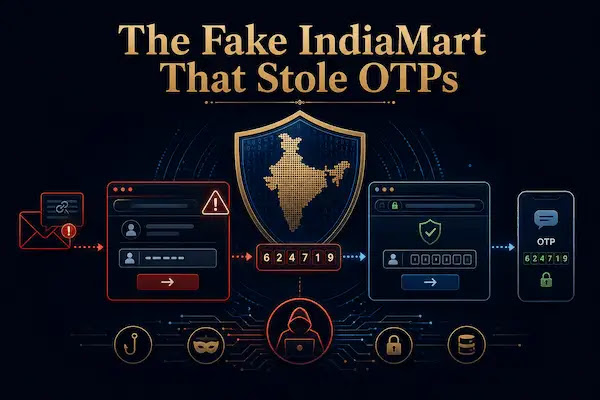
IndiaMart Phishing Injunction: Delhi HC Tackles Cyber Fraud

The Delhi High Court's recent IndiaMart injunction marks a major evolution in Indian IP enforcement by targeting the entire infrastructure of cyber fraud, including cloud hosts and telecom providers. By classifying website GUI as original artistic work under Section 2(c) of the Copyright Act and treating cloud platform infrastructure as an instrument of infringement, the Court has provided a robust framework for combatting OTP relay attacks. This order serves as a pivotal precedent for platform-wide protection and the accountability of digital intermediaries in preventing systemic trademark abuse.

10 min read