Weekly IP Digest
Weekly Indian IP Law Digest: August 16 – 22 | Its IP Time
Stay updated with the latest Indian IP law developments, including Madras HC dynamic blocking orders, Delhi HC trademark cancellation rulings, and new CGPDTM manuals.
Browse every analysis published on Its IP Time.
Stay updated with the latest Indian IP law developments, including Madras HC dynamic blocking orders, Delhi HC trademark cancellation rulings, and new CGPDTM manuals.
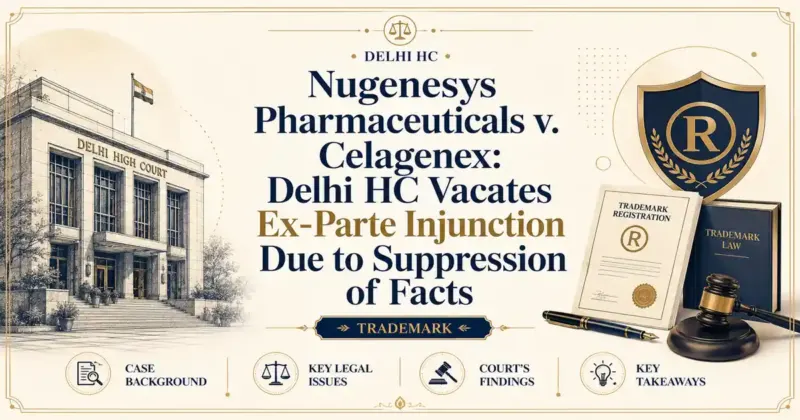
The Delhi High Court has reaffirmed that parties seeking ex-parte injunctions must uphold uberrima fides, or the duty of utmost good faith. In a recent ruling, the court vacated an ad-interim order due to the suppression of material facts, specifically prior cease-and-desist notices and trademark opposition filings. This judgment clarifies that manufactured urgency cannot be used to bypass procedural safeguards under the Commercial Courts Act. Practitioners must ensure full disclosure in pleadings to avoid the risk of having equitable relief vacated for failing the test of judicial candor.
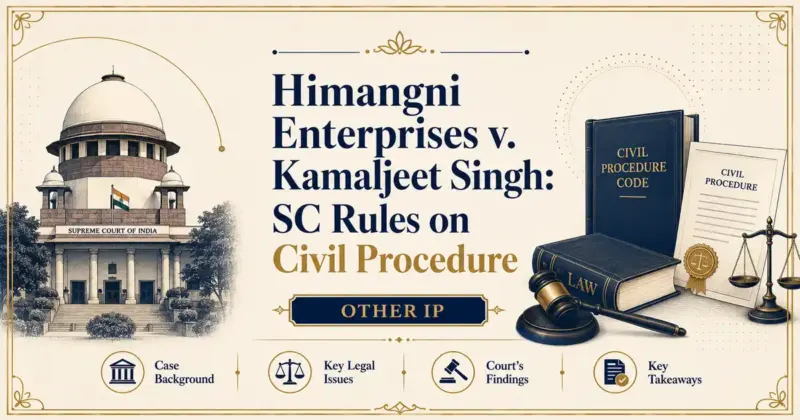
The Supreme Court of India has ruled that courts must ensure procedural fairness by linking contempt applications with pending Order XXXIX Rule 4 applications under the Code of Civil Procedure, 1908. This landmark directive prevents the premature penalization of litigants when an injunction itself is under challenge. For IP practitioners, this decision underscores the tactical necessity of synchronizing interlocutory proceedings in commercial litigation to ensure that the validity of an injunction is adjudicated before breach proceedings are enforced, ultimately upholding the principle of natural justice in high-stakes commercial disputes.
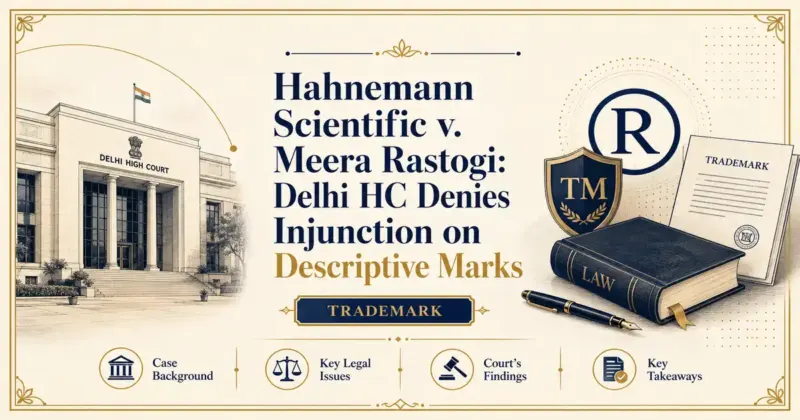
The Delhi High Court has clarified that descriptive trademarks lack the exclusivity required for injunctive relief in passing off actions unless secondary meaning is proven. Relying on the Wander v. Antox precedent, the court emphasized that appellate interference in discretionary orders is restricted, particularly when the appellant fails to disclose historical prosecution disclaimers. This ruling highlights the necessity of robust evidence for prior use and warns practitioners that subsequent trademark registrations cannot retroactively justify delays in filing appeals under the Limitation Act.
The Bombay High Court has validated a consent decree that effectively resolves a trademark infringement and passing off dispute by imposing strict punitive consequences for future violations. By leveraging the Commercial Courts Act 2015, the parties achieved an enforceable resolution that includes the destruction of infringing goods, withdrawal of trademark applications, and a substantial financial penalty clause. This judgment underscores the efficacy of well-drafted consent terms in securing proprietary interests while bypassing the extended duration of trial proceedings in high-stakes intellectual property litigation.
The Madras High Court’s decision to grant a dynamic blocking order against internet service providers underscores the judiciary's proactive stance in protecting cinematographic intellectual property. By invoking Section 13(1)(b) and Section 51 of the Copyright Act 1957, the court recognized that the immediate restraint of rogue websites is essential to preventing irreparable harm. This case serves as a vital precedent for IP lawyers, highlighting that comprehensive evidentiary schedules and precise adherence to Order XXXIX of the Civil Procedure Code are critical to securing effective interim relief.
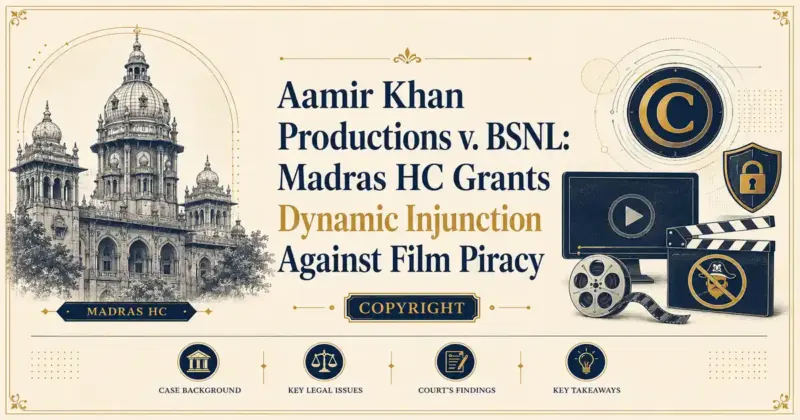
The Madras High Court has issued a landmark dynamic injunction to combat film piracy, ordering multiple internet service providers to block access to both existing and future unauthorized mirror websites hosting copyrighted content. Grounded in Section 51 of the Copyright Act 1957, this ruling confirms that the Central Board of Film Certification (CBFC) certificate serves as prime facie evidence of ownership. Practitioners should utilize broad, future-facing prayer clauses to effectively neutralize digital piracy and prevent the persistent migration of infringing content to new domain names.
The Madras High Court has established that a transfer of rectification proceedings from the Registrar of Trade Marks to the High Court under Section 125 of the Trade Marks Act 1999 mandates strict adherence to natural justice. An administrative oversight in serving notice to the petitioner constitutes a fatal procedural defect, warranting the restoration of the plea. Legal practitioners must independently verify case statuses via the High Court docket, as relying solely on the registry’s administrative machinery poses significant risks to client property rights and procedural standing.
The Delhi High Court has reinforced the sanctity of the Trade Marks Register by ordering the cancellation of a conflicting mark under Section 57 of the Trade Marks Act 1999. In Dr. Reddy's v. Razenta, the Court prioritized the rights of a prior user, emphasizing that well-known marks require absolute protection, particularly in the healthcare sector where confusion could lead to medical errors. This judgment confirms that registration is not an absolute defense and that the Court will exercise its rectification powers to remove deceptive marks that undermine existing brand reputation.
The Delhi High Court has affirmed that using a mark as a business identifier does not exempt an entity from trademark infringement liability if the mark is phonetically similar to a well-known brand. In Noviets Pharma v. Novartis, the Court upheld an injunction, citing the triple identity test and the global reputation of the NOVARTIS mark. By prioritizing consumer protection and international recognition via WIPO and INDRP findings, the ruling serves as a stern warning against riding on the coattails of established corporate identities within the sensitive Indian pharmaceutical market.
This digest examines recent Indian IP rulings, including Bombay HC's trade dress standards in Jyothy Labs and Delhi HC's jurisdictional clarity on patent litigation.
The Delhi High Court has confirmed that all patent and design infringement suits must be adjudicated by the Commercial Division of the High Court to ensure specialized oversight. In Yes Bank v. Modi Rubber, the bench held that Section 104 of the Patents Act 1970 and the Designs Act 2000 are inextricably linked to the Commercial Courts Act 2015. This procedural mandate streamlines litigation, ensuring that complex technical disputes are handled by benches equipped for commercial matters, thereby reducing jurisdictional ambiguity and fostering consistent judicial administration for intellectual property rights nationwide.