trademark
Devans Modern Breweries v. Cartel Bros: Delhi HC Cancels Whisky Mark
A registered trademark proprietor maintains an exclusive, enforceable right under Section 28 of the Trade Marks Act 1999 even...
Browse every analysis published on Its IP Time.
A registered trademark proprietor maintains an exclusive, enforceable right under Section 28 of the Trade Marks Act 1999 even...
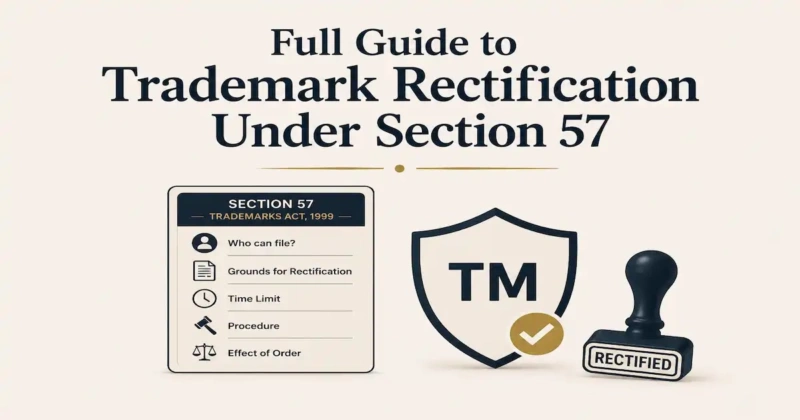
Comprehensive statutory guide to Section 57 of the Trade Marks Act, 1999: grounds for rectification, removal for non-use, and High Court IP Division procedure in India.
The Delhi High Court has reaffirmed that the Trade Marks Registry must pass reasoned, speaking orders that substantively engage with an applicant's arguments. Failing to address specific submissions in an examination reply violates the principles of natural justice, rendering the refusal order legally untenable. Registrars must conduct a holistic assessment of a mark as a whole, rather than dissecting it, and evaluate distinctiveness specifically in relation to the goods applied for. This precedent mandates that the Registry move beyond boilerplate objections to provide transparent, reviewable justifications for all trademark registration denials.
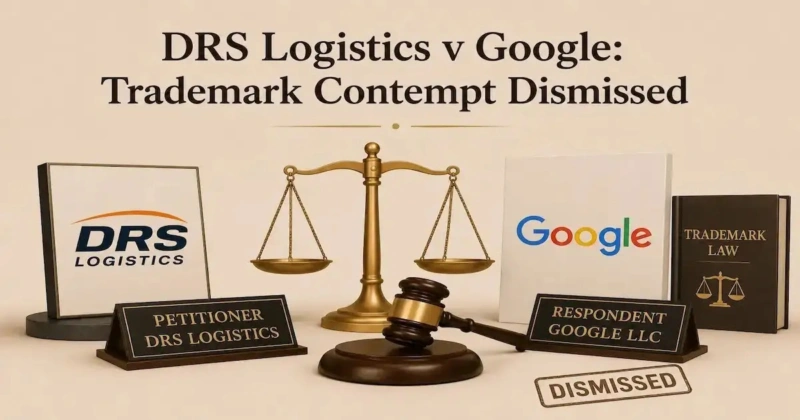
In DRS Logistics v. Google, Delhi HC dismissed contempt over Google Ads keyword bidding, holding platforms need not proactively monitor trademarks without court mandate.
Pharmaceutical brand owners can effectively protect their market position by coupling trademark registrations with copyright protection for packaging artwork. In cases of blatant imitation, Indian courts prioritize the 'average consumer' test, finding deceptive similarity where there is phonetic and visual overlap. Defendants who fail to contest proceedings reinforce the presumption of dishonesty. Under the Commercial Courts Act, 2015, IP owners should proactively lead evidence on actual damages to move beyond nominal costs, ensuring their long-term investment in trade dress and brand identity is fully judicially recognized.
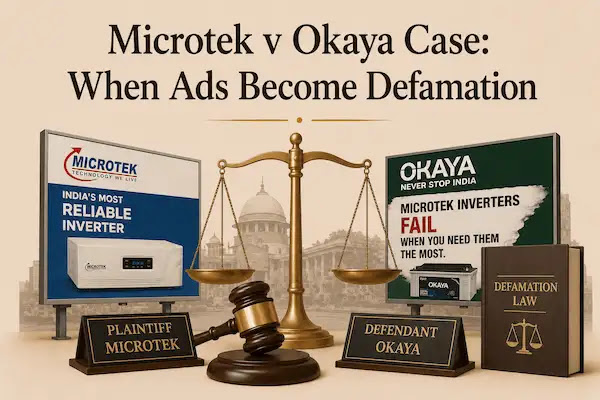
Delhi HC restrained trademark disparagement and trade libel in Microtek v. Okaya, holding fabricated WhatsApp claims lose Section 29(8)/30(1) comparative ad protection.
This week's IP law digest covers critical developments in Indian jurisprudence. The Bombay High Court...
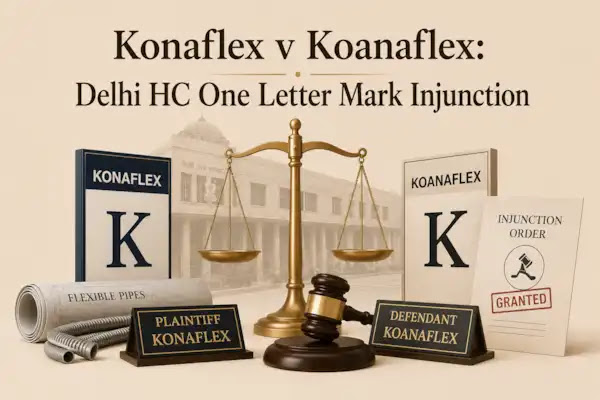
Trademark infringement in India does not require identity; phonetic and visual similarity, especially in oral trade, creates deceptive similarity. The Delhi High Court confirmed that minor variations, such as inserting a single letter, fail to distinguish coined marks when the underlying trade context is prone to oral confusion. In pharmaceutical and industrial sectors where ordering occurs via verbal communication, courts apply the test of the ordinary, hurried purchaser. Trademark protection for coined marks remains robust, as these rely entirely on sound and shape to anchor consumer brand memory.
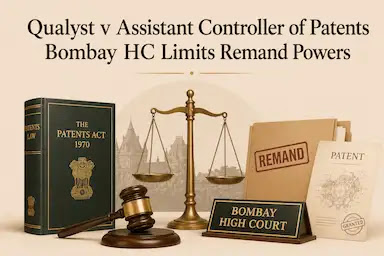
A court-ordered remand to the Indian Patent Office for a fresh hearing does not grant the Controller a license to conduct a de novo examination or introduce new prior art. The Bombay High Court has ruled that unless explicitly authorized, a remand triggered by natural justice violations restricts the Controller to clarifying existing objections on the record. This ensures procedural fairness under the Patents Act, preventing the Patent Office from using a limited remand as a mechanism to relitigate an application beyond its original scope.
Can brands use Instagram Audio library music in Reels? Delhi HC's Zee vs. Libas ruling explains commercial copyright infringement, Section 52 limits, and licensing.
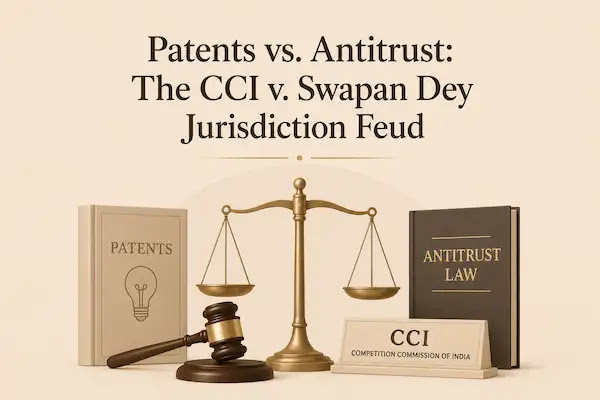
The Supreme Court of India in CCI v. Swapan Dey is currently determining whether the Competition Commission of India (CCI) holds jurisdiction over anti-competitive practices tied to patent rights. While the NCLAT previously argued that the Patents Act 1970 operates as a self-contained code, the Supreme Court has stayed this exclusion, signaling that patent exclusivity cannot shield owners from antitrust scrutiny. This case is pivotal for clarifying how Section 3(5) of the Competition Act interacts with patent monopolies to prevent the abuse of a dominant position in Indian pharmaceutical markets.
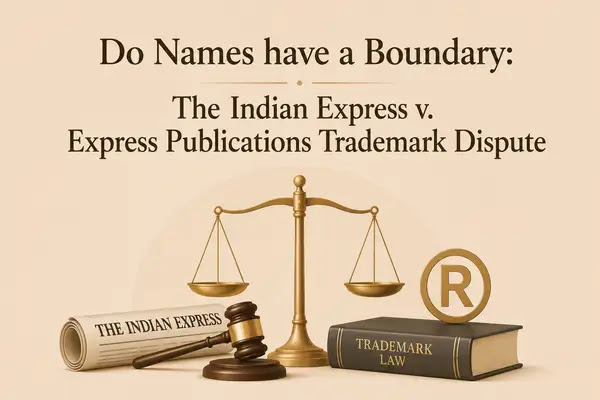
Trademark rights derived from settlement agreements and consent decrees are strictly governed by their explicit territorial and functional scope. The Bombay High Court in Indian Express v. Express Publications (Madurai) ruled that a permitted user cannot unilaterally expand trademark use to commercial events outside designated regions. The decision underscores that adding prefixes like 'New' to a registered mark does not grant independent proprietary rights that bypass the terms of a court-recorded agreement. Contractual limits on licensing are binding, and courts will narrowly construe derivative usage in family business splits.