An Advocate enrolled on the rolls of the Bar Council of the State of Andhra Pradesh. What started as curiosity about how the law protects ideas, brands, inventions, and creative works gradually developed into a genuine passion for studying and explaining IP law, inspiring me to pursue a Masters degree (LL.M.) in Intellectual Property Rights (IPR).
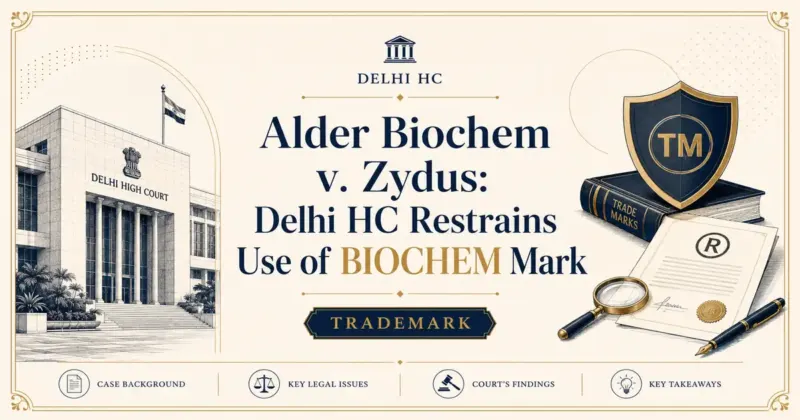
The Delhi High Court recently reaffirmed that adding a prefix to a registered trademark does not shield a defendant from infringement claims in the pharmaceutical sector. In Alder Biochem v. Zydus, the Court held that BIOCHEM is the essential identifier of the plaintiffs' mark, rendering ALDER BIOCHEM deceptively similar. This ruling underscores that under Section 29 of the Trade Marks Act 1999, prior usage and phonetic similarity carry decisive weight. Courts will strictly protect established brands to prevent consumer confusion, regardless of third-party usage arguments, prioritizing public health and commercial goodwill.
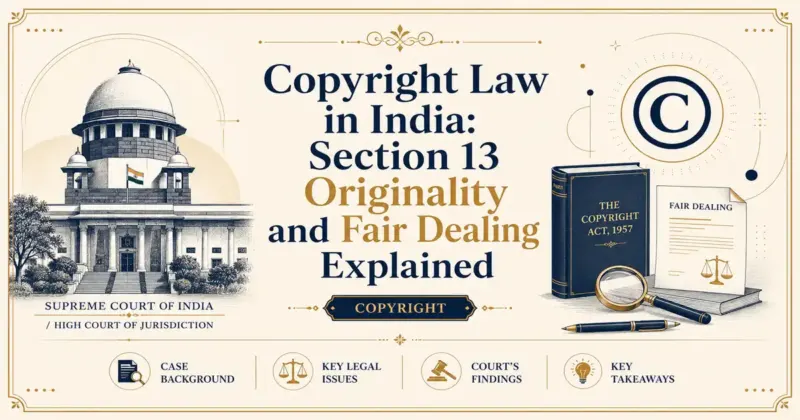
Copyright law in India protects the expression of ideas rather than ideas themselves, requiring a modicum of creativity to meet the statutory threshold for originality under Section 13. As established by Supreme Court precedent, originality is determined by the author's skill and labour, distinct from the mere sweat of the brow. Fair dealing provisions under Section 52 provide necessary exceptions for research and academic use, provided they do not infringe upon the owner's commercial rights. Understanding these principles is essential for balancing creator incentives with public access in the digital landscape.
The Madras High Court has restricted the scope of protection for device marks, ruling that registration of a composite mark does not grant exclusive rights to its individual constituent words. In FreeElective v. Matrimony.com, the court relied on Section 17 of the Trade Marks Act 1999 to clarify that infringement actions cannot be leveraged against parts of a device mark unless separately registered. This judgment reinforces that Indian law distinguishes strictly between device and word marks, limiting statutory exclusivity to the trademark taken as a whole.
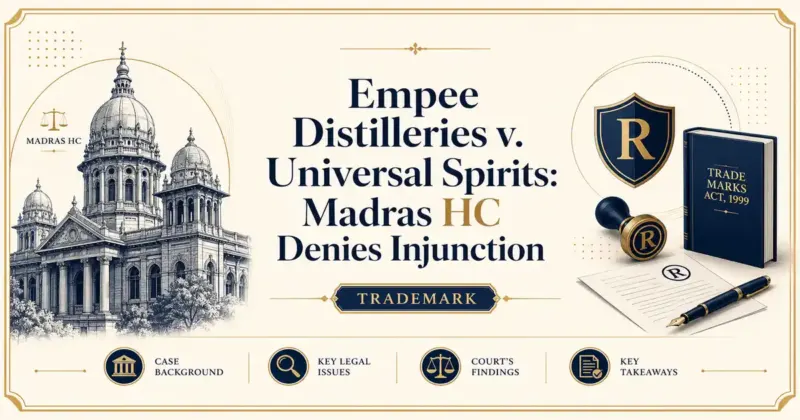
The Madras High Court has clarified that an injunction against alleged trademark infringement requires tangible evidence of consumer confusion, particularly in the spirits industry. In Empee Distilleries v. Universal Spirits, the court applied the dominant feature and anti-dissection rules, denying interim relief where branding differences were sufficient to preclude market deception. This ruling emphasizes that speculative claims regarding brand dilution are insufficient; plaintiffs must demonstrate a high threshold of actual or likely confusion to warrant judicial intervention under Section 29 of the Trade Marks Act 1999.
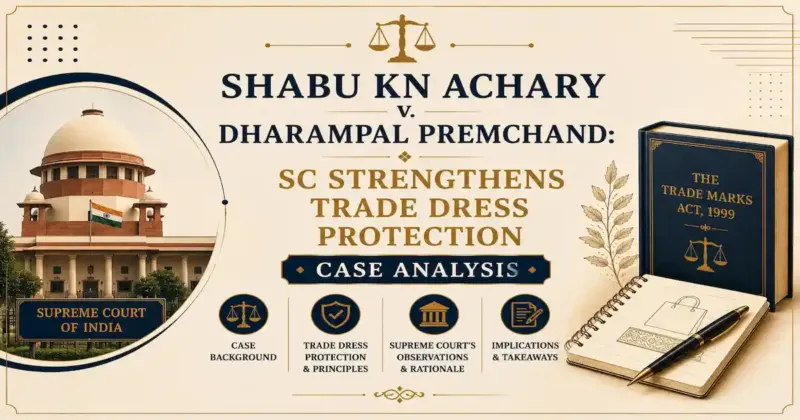
The Supreme Court of India has reaffirmed that well-known trademarks and unique trade dress receive robust protection against deceptive imitation. In Shabu KN Achary v. Dharampal Premchand, the Court confirmed that visual identity holds equal legal weight to registered word marks under the Trade Marks Act 1999. By invoking Section 11(6), the judgment mandates that courts must prioritize the prevention of consumer confusion. This ruling clarifies that established brand equity, supported by consistent promotional evidence, justifies awarding significant damages for trademark and copyright infringement.
The Delhi High Court has reinforced that pharmaceutical patent refusals must demonstrate clear, reasoned justifications regarding inventive step and efficacy. In the matter of Esteve Pharmaceuticals, the court clarified that the Controller must engage substantively with an applicant's technical submissions rather than issuing generic statutory rejections. Establishing a departure from prior art is essential for compliance with Section 3(d) and 3(e) of the Patents Act 1970. This ruling mandates rigorous scientific evidence to overcome obviousness objections and secure patentability for new forms of known substances.
The Delhi High Court has affirmed that deceptive trade dress in FMCG packaging warrants an immediate injunction to prevent consumer confusion. In Emami v. Dabur, the court prioritized the protection of established brand identity over the operational costs of rebranding, ruling that irreparable injury to a plaintiff’s market equity outweighs the defendant's transition burden. This decision underscores that proving deceptive similarity is the primary threshold for securing judicial intervention under the Trade Marks Act 1999, specifically regarding the balance of convenience in look-alike product litigation.
Territorial jurisdiction in a passing-off suit cannot be established by the mere filing of a trademark application at a specific Registry office. Jurisdiction must be rooted in the geographical location of trade, sales, or the focal point of consumer deception, as defined by the Code of Civil Procedure. A pending application confers no statutory rights and does not constitute a cause of action, as passing off protects goodwill gained through actual market activity. Litigants must differentiate between procedural registry filings and the substantive evidence required to sustain an IP infringement claim.
A comprehensive trademark clearance search is the primary defense against future IP litigation and costly rebrands for Indian startups. By evaluating phonetic, visual, and conceptual similarity alongside consumer sophistication levels, practitioners can identify high-risk marks before filing. Effective searches must extend beyond the CGPDTM database to identify well-known marks and potential oppositions. This strategic assessment, grounded in the Trade Marks Act, provides the necessary predictive clarity to determine whether a brand name is truly registrable or poses a high risk of confusion in the marketplace.
The Delhi High Court's 2026 ruling in S.S. White Burs Inc. confirms that bad faith trademark registration under Section 11(10)(ii) of the Trade Marks Act, 1999, requires proof of dishonest adoption and suppression of material facts. This landmark decision establishes that Rule 33 of the Trade Marks Rules, 2017, imposes a mandatory duty on the Registrar to cite prior marks. By rejecting defences of honest concurrent use and trans-border reputation based on derivative goodwill, the court reinforces strict standards of candour for applicants and provides a clear strategy for rectification proceedings.
•7 min read
Free Email Newsletter
Stay Ahead in IP Law with Its IP Time
Receive concise weekly and monthly IP Law updates.