An Advocate enrolled on the rolls of the Bar Council of the State of Andhra Pradesh. What started as curiosity about how the law protects ideas, brands, inventions, and creative works gradually developed into a genuine passion for studying and explaining IP law, inspiring me to pursue a Masters degree (LL.M.) in Intellectual Property Rights (IPR).
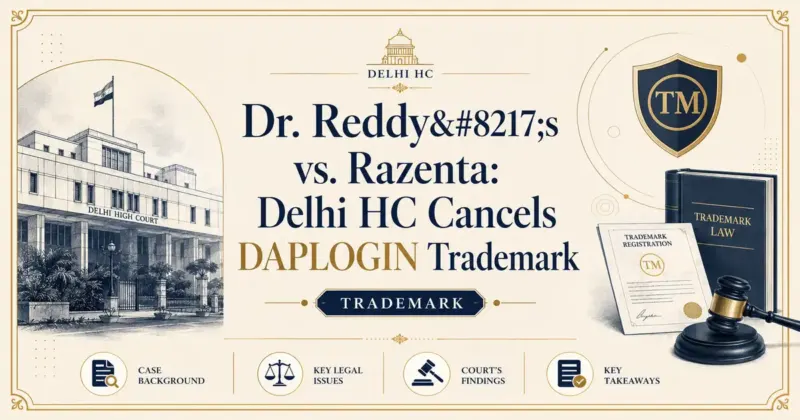
The Delhi High Court has reinforced the sanctity of the Trade Marks Register by ordering the cancellation of a conflicting mark under Section 57 of the Trade Marks Act 1999. In Dr. Reddy's v. Razenta, the Court prioritized the rights of a prior user, emphasizing that well-known marks require absolute protection, particularly in the healthcare sector where confusion could lead to medical errors. This judgment confirms that registration is not an absolute defense and that the Court will exercise its rectification powers to remove deceptive marks that undermine existing brand reputation.
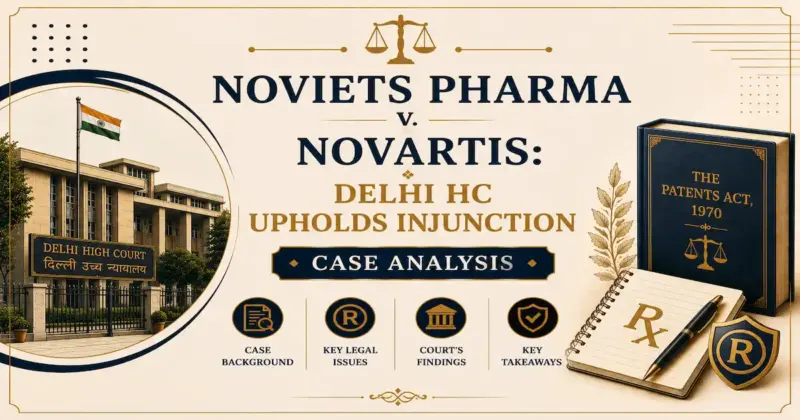
The Delhi High Court has affirmed that using a mark as a business identifier does not exempt an entity from trademark infringement liability if the mark is phonetically similar to a well-known brand. In Noviets Pharma v. Novartis, the Court upheld an injunction, citing the triple identity test and the global reputation of the NOVARTIS mark. By prioritizing consumer protection and international recognition via WIPO and INDRP findings, the ruling serves as a stern warning against riding on the coattails of established corporate identities within the sensitive Indian pharmaceutical market.
This digest examines recent Indian IP rulings, including Bombay HC's trade dress standards in Jyothy Labs and Delhi HC's jurisdictional clarity on patent litigation.
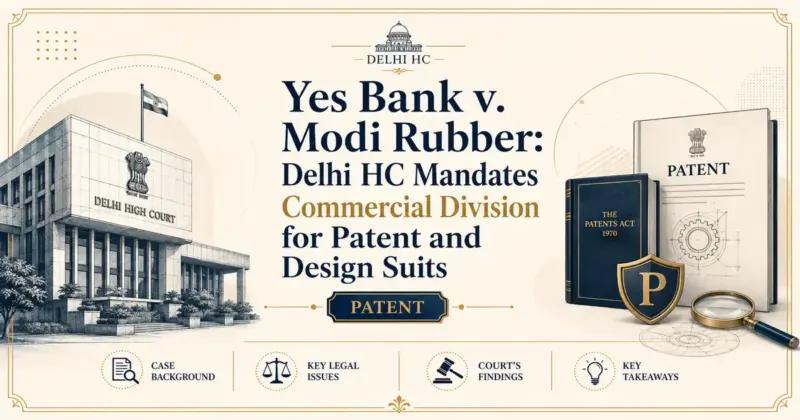
The Delhi High Court has confirmed that all patent and design infringement suits must be adjudicated by the Commercial Division of the High Court to ensure specialized oversight. In Yes Bank v. Modi Rubber, the bench held that Section 104 of the Patents Act 1970 and the Designs Act 2000 are inextricably linked to the Commercial Courts Act 2015. This procedural mandate streamlines litigation, ensuring that complex technical disputes are handled by benches equipped for commercial matters, thereby reducing jurisdictional ambiguity and fostering consistent judicial administration for intellectual property rights nationwide.
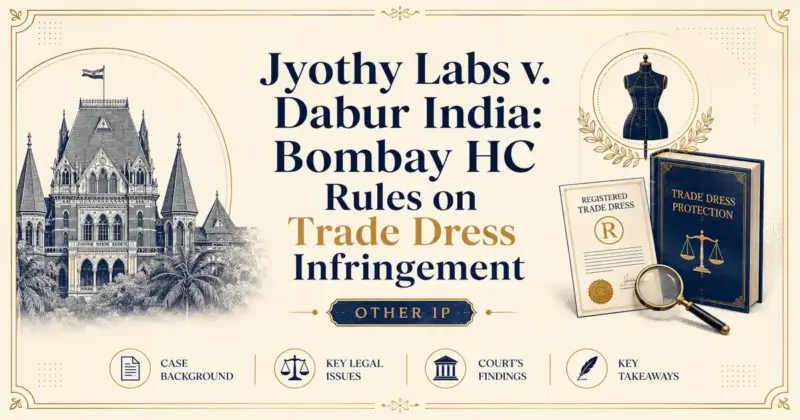
The Bombay High Court has clarified that trade dress protection extends beyond individual packaging elements to the overall visual impression created for the average consumer. In Jyothy Labs v. Dabur, the Court ruled that strategic emulation of a competitor's trade dress constitutes passing off, even if brand names differ. By applying the global test for similarity under the Trade Marks Act 1999, the judiciary protects established market goodwill against deceptive mimicry. This decision emphasizes that trade dress audits are essential for companies to avoid liability and maintain brand integrity in the competitive FMCG sector.
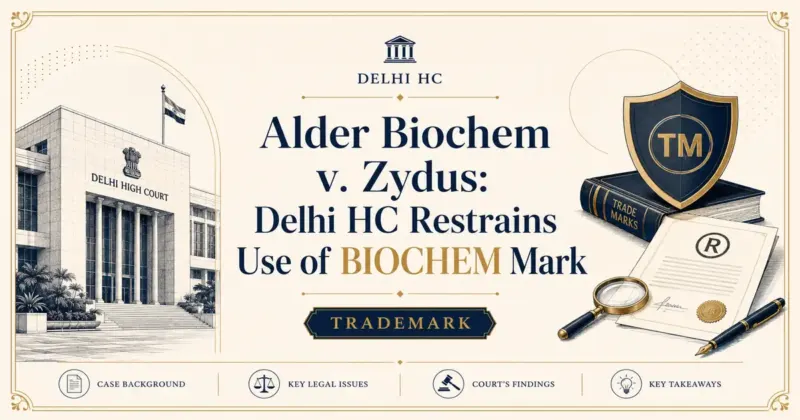
The Delhi High Court recently reaffirmed that adding a prefix to a registered trademark does not shield a defendant from infringement claims in the pharmaceutical sector. In Alder Biochem v. Zydus, the Court held that BIOCHEM is the essential identifier of the plaintiffs' mark, rendering ALDER BIOCHEM deceptively similar. This ruling underscores that under Section 29 of the Trade Marks Act 1999, prior usage and phonetic similarity carry decisive weight. Courts will strictly protect established brands to prevent consumer confusion, regardless of third-party usage arguments, prioritizing public health and commercial goodwill.
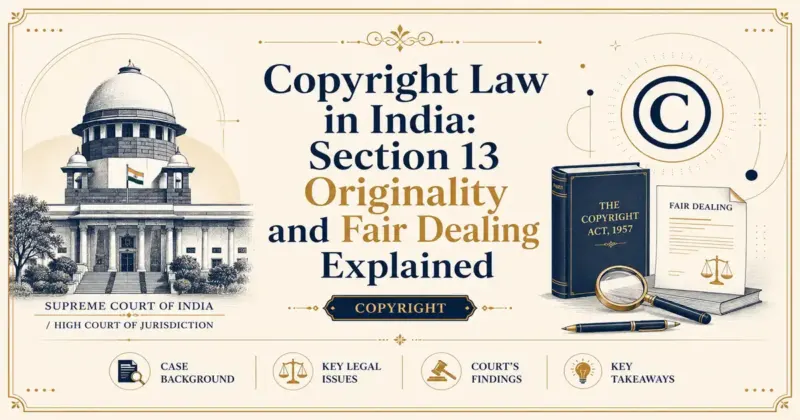
Copyright law in India protects the expression of ideas rather than ideas themselves, requiring a modicum of creativity to meet the statutory threshold for originality under Section 13. As established by Supreme Court precedent, originality is determined by the author's skill and labour, distinct from the mere sweat of the brow. Fair dealing provisions under Section 52 provide necessary exceptions for research and academic use, provided they do not infringe upon the owner's commercial rights. Understanding these principles is essential for balancing creator incentives with public access in the digital landscape.
The Madras High Court has restricted the scope of protection for device marks, ruling that registration of a composite mark does not grant exclusive rights to its individual constituent words. In FreeElective v. Matrimony.com, the court relied on Section 17 of the Trade Marks Act 1999 to clarify that infringement actions cannot be leveraged against parts of a device mark unless separately registered. This judgment reinforces that Indian law distinguishes strictly between device and word marks, limiting statutory exclusivity to the trademark taken as a whole.
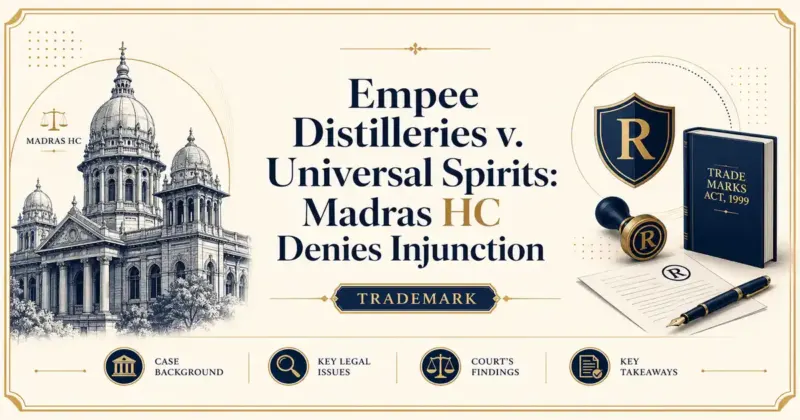
The Madras High Court has clarified that an injunction against alleged trademark infringement requires tangible evidence of consumer confusion, particularly in the spirits industry. In Empee Distilleries v. Universal Spirits, the court applied the dominant feature and anti-dissection rules, denying interim relief where branding differences were sufficient to preclude market deception. This ruling emphasizes that speculative claims regarding brand dilution are insufficient; plaintiffs must demonstrate a high threshold of actual or likely confusion to warrant judicial intervention under Section 29 of the Trade Marks Act 1999.
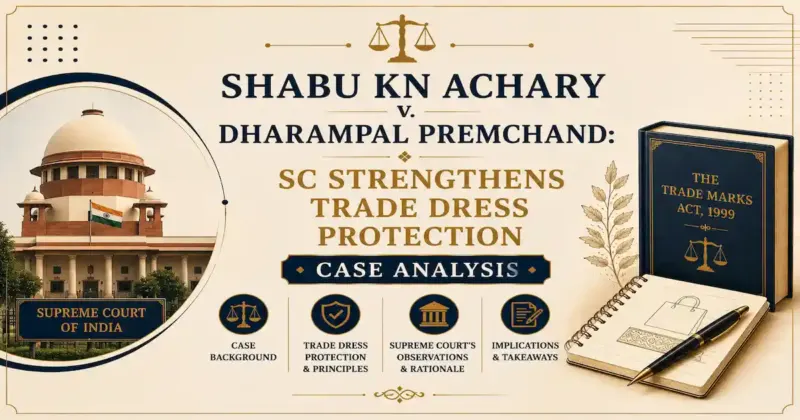
The Supreme Court of India has reaffirmed that well-known trademarks and unique trade dress receive robust protection against deceptive imitation. In Shabu KN Achary v. Dharampal Premchand, the Court confirmed that visual identity holds equal legal weight to registered word marks under the Trade Marks Act 1999. By invoking Section 11(6), the judgment mandates that courts must prioritize the prevention of consumer confusion. This ruling clarifies that established brand equity, supported by consistent promotional evidence, justifies awarding significant damages for trademark and copyright infringement.
•6 min read
Free Email Newsletter
Stay Ahead in IP Law with Its IP Time
Receive concise weekly and monthly IP Law updates.